

Reviewed · WALKING TOURS
Honolulu Downtown Walking Tour
Start with a statue, end with an empire story. This Honolulu Downtown Walking Tour is a compact morning walk that strings together the political and cultural shifts that shaped Hawaii, from early rule through U.S. influence. You get a local guide with a clear, story-driven approach, and the stops are clustered downtown so you don’t burn your vacation on transit.
I especially love two things. First, the tour gives you context at major anchors like the Iolani Palace and the Hawaii State Capitol, so you understand what you’re actually looking at. Second, it’s a strong value: it costs just $5 and the listed admissions for the named stops are free, so you’re paying for the guide and timing, not entry fees.
One drawback to plan around: the pace is more standing and storytelling than big sightseeing miles. If you’re hoping for lots of walking between far-apart spots, you might wish it had a bit more motion.
In This Review
- Quick hits: what makes this walk work
- Downtown Honolulu’s royal-and-government core, in one morning
- Price and value: why $5 feels unusually fair
- How much walking is it, really? Plan for standing more than mileage
- Stop 1: King Kamehameha Statue and the origin story
- Aliʻiolani Hale: government space with a monarch-era feel
- Stop 2: Iolani Palace and the monarchs behind the story
- Stop 3: Hawaii State Capitol and the shift to U.S. territory and statehood
- Stop 4: Kawaiahaʻo Church, plus quick looks at City Hall and the State Library
- Stop 5: King Lunalilo Mausoleum and a quieter ending
- The guide experience: clear storytelling with Q&A built in
- Who should book this Honolulu walking tour
- Should you book? My practical call
- FAQ
- How much does the Honolulu Downtown Walking Tour cost?
- How long is the tour?
- Where do I meet the guide?
- What time does the tour start?
- Is this tour inside Waikiki?
- What language is the tour offered in?
- Do I need to print a ticket?
- Are service animals allowed?
- How many people are in a group?
- What happens if the weather is bad?
- Is there free cancellation?
Quick hits: what makes this walk work
- Tight downtown route: the main sights fit into a small area, so you’re not constantly repositioning
- Free listed admissions at the stops, which keeps the cost feeling honest
- Story-first guiding focused on monarchs, government, and the people behind the changes
- A good fit for limited time: you get a broad picture in about 70–80 minutes
- Small group size (maximum 30), which keeps the experience more manageable
- A very readable pace: many people find it accessible, even if you’ll be standing often
Downtown Honolulu’s royal-and-government core, in one morning
This tour starts at the King Kamehameha Statue area on Punchbowl St / South King St (meet in front of the statue at 447 S. King St, Honolulu, HI 96813). It’s a morning tour with a 9:00 am start, and it wraps back at the same meeting point. That matters because downtown Honolulu can feel spread out once you start hunting for landmarks on your own.
Also, this is outside Waikiki and geared toward the downtown area. That’s good news if you want to see the seats of power and heritage sites rather than just beaches and high-rise hotels. You’ll be walking through a mix of civic buildings and historic grounds that help you connect the dots between royal rule, changing institutions, and the politics that brought Hawaii into a new relationship with the U.S.
One practical note: the experience is weather-dependent. If conditions aren’t good, the operator offers either a different date or a full refund. So on days when the forecast looks rough, it’s smart to check the day-of update or be ready with backup plans.
Finally, you’re not dealing with a huge crowd. The tour caps at 30 travelers, which usually means you can hear the guide without constantly craning your neck.
Oahu at a stroll, a few more routes
- Honolulu Haunts: Ghosts and Spirits Walking Tour★ 4.2 · 169 reviews
- Honolulu Downtown Walking Tour★ 5.0 · 149 reviews
- Kualoa Ranch – Horseback Walking Tour★ 4.0 · 145 reviews
- Ghosts of Old Honolulu Walking Tour★ 4.5 · 53 reviews
Price and value: why $5 feels unusually fair
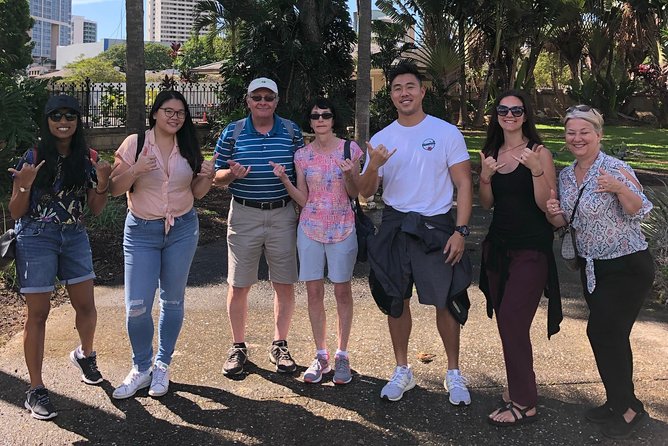
Let’s talk money, because $5 sounds almost too small for a guided tour—yet that’s exactly the point. You’re paying for a guided walk and the guide’s ability to explain what these buildings and sites mean.
The stops listed on the route show admission tickets free, including places like the King Kamehameha Statue, Iolani Palace area, Hawaii State Capitol, Kawaiahaʻo Church, and the King Lunalilo Mausoleum. So your cost stays focused on the storytelling and the walking structure, not on adding entrance fees one by one.
You’ll also get a mobile ticket, so you’re not wasting time figuring out prints or last-minute ticket kiosks. The tour runs in English, and you’ll receive confirmation at booking. For a short morning plan that gives you a coherent view of Honolulu’s history, it’s hard to beat the value.
If you’re doing other Oʻahu activities later—beach time, hikes, Polynesian shows—this works like a “set the stage” morning. It gives your day a backbone.
How much walking is it, really? Plan for standing more than mileage
This is a walking tour, but it’s not a long-distance march. Multiple guides’ pacing styles fit the route length: you’ll move between stops, but there’s a lot of time spent paused at viewpoints and at the landmarks themselves.
One review noted it as more standing than walking, with the tour still packed with facts. Another mentioned that the route stays within about a 1.5 km radius, hitting roughly four to five main landmarks in that pocket while covering the important stuff. That lines up with how the stop list looks: you’re touring downtown’s core of heritage and government sites.
So pack for comfort, not endurance:
- Wear shoes that handle city sidewalks.
- Expect to stand still during story time.
- If rain shows up, keep a light layer handy (the tour has run on grey days for at least some groups).
If you want an action-packed walk with big legs and long gaps between stops, this isn’t that. But if you want a guided “what am I looking at and why does it matter?” experience with minimal walking stress, it fits.
Stop 1: King Kamehameha Statue and the origin story
Your first stop is the King Kamehameha Statue, where the guide sets the foundation. This is where you hear the story of how Polynesians, Austronesians, and Hawaiians connect, and how the first and only nation of Hawaii took shape. Even if you’ve read bits of Hawaiian history before, a strong opening like this can help you build a clearer timeline before the tour shifts into monarchs and institutions.
Why this first stop works: Kamehameha isn’t just a famous name. It’s a doorway into understanding unification and how leadership, governance, and identity were tied together. The guide’s goal here is to help you see the rest of the downtown landmarks as part of a single narrative rather than a list of random impressive buildings.
Time here is about 15 minutes, which is long enough for the guide to paint the bigger picture without sending you off into deep lecture mode for too long.
- Waikiki Trolley Blue Line Coastline & Local Grindz Hop-on Hop-off
★ 5.0 · 4,159 reviews - Oahu Circle Island Tour with Waimea Waterfall
★ 5.0 · 3,912 reviews - Oahu’s North Shore: 8-Line Zipline Adventure
★ 5.0 · 3,616 reviews - Hidden Gems of Oahu Circle Island Tour with Byodo In Temple
★ 5.0 · 3,450 reviews - Toa Luau at Waimea Valley, Oahu
★ 5.0 · 3,350 reviews
Aliʻiolani Hale: government space with a monarch-era feel
Next comes Aliʻiolani Hale. The stop is brief (it’s slotted between the first and second main landmarks), but it matters because it’s another anchor in the story of Hawaiian governance. Even when the tour doesn’t give you a long pause here, the guide uses the building to point you toward how authority and administration evolve over time.
What I like about this kind of stop is that you’re learning from the setting. When a guide ties a building to the people and the decisions behind it, it’s easier to remember than if you just read about it later.
If you’re the type who wants the why behind architecture and power structures, you’ll appreciate how quickly this stops nudges you toward that mindset.
Stop 2: Iolani Palace and the monarchs behind the story
The big royal landmark on this route is Iolani Palace. Here, the guide explains the different monarchs and brings in the outside forces that helped shape Hawaii’s modern history—specifically how U.S. mainlanders and Europeans played a vital role in the story’s turning points.
This stop is about 15 minutes. That’s perfect timing for most people: you get enough context to understand what the palace represents historically without needing a full museum-length visit.
Here’s why this landmark is so valuable on a walking tour: you’re not just looking at the building. You’re learning what the palace meant in the political ecosystem of the islands, and how external pressures changed the trajectory. Even if you only have a short morning, this is a core stop for getting your bearings.
Stop 3: Hawaii State Capitol and the shift to U.S. territory and statehood
Next is the Hawaii State Capitol, where the guide explains how Hawaii became a U.S. territory and later a U.S. state. This is one of the most practical stops for understanding modern Hawaii, because it links history directly to the present-day political structure.
Time here is about 15 minutes. That pacing helps you keep the “story thread” moving: monarchy and governance (earlier stops) flow into the formal U.S. political timeline here.
If you want to understand why certain institutions look the way they do, this is the point where things start making sense visually as well as historically. You’ll come away with a clearer idea of the relationship between Hawaiian leadership structures and the U.S. government framework that followed.
Stop 4: Kawaiahaʻo Church, plus quick looks at City Hall and the State Library
The tour includes Kawaiahaʻo Church for about 10 minutes. The time is short, but it’s placed right in the middle of the civic-and-institution arc. The guide uses the stop to keep your mental map aligned: royal era, shifting governance, and the public-facing institutions that shape daily life.
After that, you’ll also stop at Honolulu City Hall and the Hawaii State Library. The tour doesn’t linger long at every civic site, but it’s still worthwhile. These are the kind of buildings you’d otherwise glance at without understanding how power, policy, and public life relate to history.
A quick stop here is a smart strategy. It gives you orientation in the downtown grid and helps you connect what you see with what the guide is saying.
If you love details, be ready for stories that move beyond the obvious. One feedback highlight included a fascination with names tied to monarch chronology and personalities—like Marvin Nogelmeier—which shows the guide is willing to add human threads to keep the timeline from feeling like dates only.
Stop 5: King Lunalilo Mausoleum and a quieter ending
The tour finishes with King Lunalilo Mausoleum, including King Lunalilo’s garden and burial grounds. This stop runs about 15 minutes, and it works as a thoughtful counterweight to the more formal governance landmarks you’ve seen earlier.
Why the ending matters: after you’ve followed history through monarchs and political transitions, you get a chance to see the lasting presence of leadership through place—through a burial site and the cared-for garden around it.
It’s a calmer close to the tour, and the contrast makes the earlier stops hit a little harder. You’ll likely leave with a better sense that these weren’t just political events. They were also personal lives and legacies.
Then you head back to the meeting point, which keeps the morning simple.
The guide experience: clear storytelling with Q&A built in
This tour’s reputation really centers on the guide’s communication. Across multiple named instances, a guide named Susan stands out for plain-language storytelling and strong engagement.
What I’d watch for (and what you can take advantage of) is how the guide handles questions. Some of the feedback calls out that the guide answers inquiries well and keeps explanations readable. That’s huge for a history tour. You’re not stuck with a lecture you can’t unpack.
Guides also tend to tailor the emphasis. If you care more about monarch chronology, the guide is likely to steer details that way. If you want the U.S.-Hawaii timeline explained clearly, you’ll get that too—especially with the Hawaii State Capitol and Iolani Palace stops.
If you’re the kind of traveler who likes to ask, this is a good format. Short pauses at landmarks make it easier to raise a question without derailing the whole group.
Who should book this Honolulu walking tour
Book this if:
- You’re on your first trip to Honolulu and want a downtown history spine.
- You like history buffs type context, especially monarchs and the move toward U.S. territory/statehood.
- You have limited time and want a guided overview without spending half a day in museums.
- You prefer a short morning plan that’s easy to fit before lunch.
Skip it (or set expectations) if:
- You want long distances and lots of movement.
- You’re sensitive to tours with significant standing time.
The best match is someone who wants to understand what’s in front of them—not someone looking for a strenuous workout.
Should you book? My practical call
Yes, I’d book this Honolulu Downtown Walking Tour if you want a low-cost, high-context way to learn downtown history fast. The $5 price feels like it’s designed for accessibility, and the fact that many stops list free admission means you’re not paying again and again for entry.
Just go in with the right expectation: this is story and stops, not a mileage challenge. If you’re good with that, you’ll come away with a much clearer picture of how Hawaii’s leadership and institutions evolved—especially after you’ve seen Iolani Palace and the Hawaii State Capitol in the same morning.
If you want to make the most of it, arrive a little early, bring a light layer for the weather, and don’t be shy about questions when the guide pauses at each site.
FAQ
How much does the Honolulu Downtown Walking Tour cost?
It costs $5.00 per person.
How long is the tour?
The duration is about 1 hour 10 minutes (approximately).
Where do I meet the guide?
Meet in front of the King Kamehameha Statue at 447 S. King St, Honolulu, HI 96813.
What time does the tour start?
The start time listed is 9:00 am.
Is this tour inside Waikiki?
No. It’s outside Waikiki, near downtown Honolulu.
What language is the tour offered in?
The tour is offered in English.
Do I need to print a ticket?
You’ll use a mobile ticket.
Are service animals allowed?
Yes, service animals are allowed.
How many people are in a group?
The tour has a maximum of 30 travelers.
What happens if the weather is bad?
If it’s canceled due to poor weather, you’ll be offered a different date or a full refund.
Is there free cancellation?
Yes. You can cancel for a full refund up to 24 hours in advance of the experience’s start time.
Oahu Block by Block





More Tours in Oahu





More Tour Reviews in Oahu



Just Reviewed: More Oahu Tours






Walking Tours, compared.
 ★ 4.2Honolulu Haunts: Ghosts and Spirits Walking TourFrom $27169 reviews
 ★ 4.0Kualoa Ranch – Horseback Walking TourFrom $173145 reviews
 ★ 4.5Ghosts of Old Honolulu Walking TourFrom $3553 reviews
 ★ 5.0Honolulu’s Walking Food TourFrom $12929 reviews
 ★ 3.5Downtown Honolulu Self Guided Walking Audio TourFrom $96 reviews
 ★ 4.0Honolulu Historic District a Smartphone Audio Walking TourFrom $106 reviews
 ★ 4.0The East Waikiki Walking TourFrom $145 reviews
 ★ 5.0Private Walking Food Tour in Honolulu With Secret Food ToursFrom $3705 reviews
Where else this tour ranks