
Reviewed · HISTORICAL TOURS
Honolulu Historic District a Smartphone Audio Walking Tour
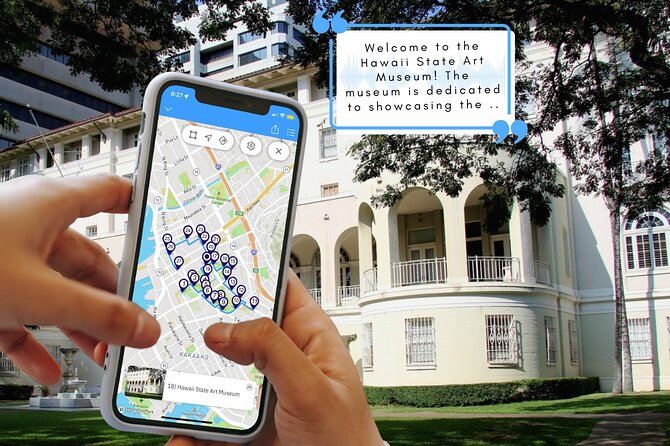
Downtown Honolulu has a story on every block. This smartphone audio walking tour strings together major landmarks around Aliʻiolani Hale with auto-playing commentary that works as you stroll. I like the live GPS map that keeps you pointed the right way, and I like that you can download the audio on Wi‑Fi first so you’re not hunting for signal.
The trade-off: this is an outdoor walking experience, so attraction entry tickets aren’t included. You’ll get the context from the sidewalk and street-level viewing, but if you want to go inside specific sites, you’ll likely need separate tickets.
In This Review
- Key Highlights You’ll Care About
- Price and Logistics: Is $10.99 Actually a Good Deal?
- How the Tour Works on Your Phone (So You Don’t Waste Time)
- Starting in the Royal Heart: Aliʻiolani Hale and King Kalakaua
- King Kamehameha I, the Kanaina Building, and the Value of Street-Level Storytelling
- Patsy’s Story, a 1879 Reading Room, and Hawaii’s Oldest Church
- A Royal Mausoleum Twist: King Lunalilo’s Choice
- Honolulu City Hall Details, Confusing Dates, and a Sculpture With a Natural Phenomenon
- The Frank F. Fasi Era and the Kind of Details Kids Notice
- Bell of Nagasaki and the Queen’s Conference Center: Peace and Power
- A Regal Manor Built in 1842, Plus Art, Faith, and Names That Evolve
- Bishop-Style Street Life, Honolulu Theatre, and New Works from Local Playwrights
- Quick Tips to Make Your Walk More Enjoyable
- Should You Book This Honolulu Historic District Audio Tour?
- FAQ
- How long does the Honolulu Historic District smartphone audio walking tour take?
- What does the tour cost?
- Is the tour offered in English?
- Do I need mobile data during the tour?
- What device do I need to use the tour?
- Does the tour include attraction tickets?
- Do I need headphones?
- Where does the tour start?
- Does the tour end somewhere else?
- Is this tour private?
- Can I cancel for a full refund?
Key Highlights You’ll Care About

- Live GPS route tracking: Your phone shows where you are on the walk.
- Auto-playing audio at each stop: Stories trigger when you reach points of interest.
- Good value for 1 to 2 hours: Short enough to fit a day plan, priced for an easy add-on.
- No signal needed during the tour: Download on Wi‑Fi before you start.
- Optional earbuds, but better with them: Audio can be quiet depending on where you stand.
- Built for flexible pacing: No hard time slots; you can go as fast or slow as you like.
Price and Logistics: Is $10.99 Actually a Good Deal?
For $10.99 per person, you’re paying for a guided-style experience without paying for a formal tour guide or group scheduling. The sweet spot here is time: you can comfortably finish in about 1 to 2 hours, then still keep the rest of your day free.
You also get practical tech support: the download-before setup means no data use during the tour and no need to chase reception mid-walk. On top of that, the audio runs on your own device, and the tour plays via your phone speaker or earbuds, so you can match it to your comfort level.
One more value point: the tour is yours to keep for flexible dates within the availability window on Tripvia Tours. That means you’re not gambling on timing as much as you would with a fixed, guided departure.
Old Honolulu after dark, more walks
- Honolulu Haunts: Ghosts and Spirits Walking Tour★ 4.2 · 169 reviews
- Historical Honolulu Bike Tour★ 5.0 · 76 reviews
- Waikiki Night Marchers Ghost Tour★ 5.0 · 64 reviews
- Downtown Honolulu Food Tour with 5 Local Favorites Tastings★ 5.0 · 54 reviews
How the Tour Works on Your Phone (So You Don’t Waste Time)

This is a smartphone audio walking tour. You start at Aliʻiolani Hale, 417 S King St, Honolulu, HI 96813, and it ends back at the same meeting point.
Here’s what makes it easy to use:
- Download on Wi‑Fi before you go: the audio is ready before you start walking.
- Live GPS map shows your location: you can sanity-check where you are as you go.
- Commentary auto-plays at each point of interest: you don’t need to keep tapping your screen.
You’ll need your smartphone (or tablet) to run the audio and GPS. Headphones are not required, but if you want cleaner audio in busy areas, earbuds are a smart choice.
Starting in the Royal Heart: Aliʻiolani Hale and King Kalakaua
You begin at Aliʻiolani Hale, known as the House of the Heavenly Kings. This is a great “first stop” because it sets the tone for the whole walk: governance, leadership, and how architecture becomes part of power.
Right away, the tour gives you the backstory that makes the building more than just another downtown facade. You’ll hear that the structure was built in 1879 for King Kalakaua, which helps you understand why this spot matters when you’re moving through the rest of the district.
Practical tip: take a slow moment here. If you’re not used to downtown sidewalks in Honolulu, this is where you can get your bearings fast and settle into the walking rhythm.
King Kamehameha I, the Kanaina Building, and the Value of Street-Level Storytelling

Next comes a visit centered on King Kamehameha I and his statue. The audio doesn’t just name the monarch; it shares folklore tied to Hawaii’s most celebrated royal figure, which makes the statue feel like part of a living tradition instead of a cold monument.
The tour then points you toward the Kanaina Building, added to the National Register of Historic Places in 1978 and noted as an important example of Victorian architecture in Hawaii. If you like noticing details, this stop is the type where the architecture gives you a visible lesson: how outside styles were interpreted locally.
Even when some landmarks are less dramatic up close, the audio structure helps you keep moving with purpose. You won’t just walk past corners wondering what you’re looking at.
Set your own pace with an audio guide
- Diamond Head Official Self-Guided Narrated Audio Tour
★ 3.0 · 212 reviews - Pearl Harbor Self-Guided Multimedia and Virtual Reality Tours
★ 4.0 · 67 reviews - Oahu Grand Circle Island Audio Driving Tour
★ 4.5 · 37 reviews - Self-Guided Audio Driving Tour in Oahu Hawaii
★ 4.5 · 30 reviews - Amazing Oahu Adventure Bundle: 6 Self-Guided Audio Tours
★ 4.5 · 25 reviews
Patsy’s Story, a 1879 Reading Room, and Hawaii’s Oldest Church
You’ll also meet a statue connected to Patsy and hear why her accomplishments led to a monument. This is the kind of stop that works especially well if you like human stories, not just dates and names.
Then the tour shifts into a “people and place” theme with a building described as a haven for book lovers. It began as a reading room established in 1879 with the practical goal of keeping unruly sailors out of mischief. That’s a neat reminder that public spaces often form for very real, everyday reasons.
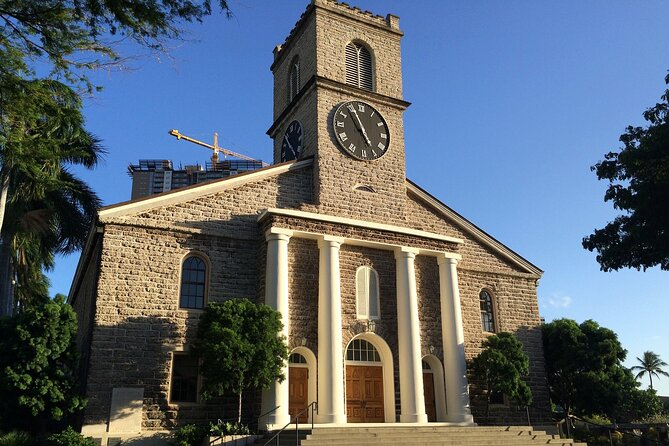
After that, you’ll hear about Hawaii’s oldest church. The value here is how the audio frames religious history as part of the wider community story, not a standalone subject.
If you prefer tours that tell you why the place exists, these stops are strong. They connect the brick-and-stone world to daily life.
A Royal Mausoleum Twist: King Lunalilo’s Choice

One of the more intriguing stops is tied to King Lunalilo. You’ll hear why he refused to be interred in the Royal Mausoleum and instead is buried here.
This is a great example of what makes audio tours work when they’re done well: instead of treating the monument like trivia, you get a decision and a personal story. You’ll likely find yourself looking at the burial site with more meaning than you expected from an outdoor stop.
Honolulu City Hall Details, Confusing Dates, and a Sculpture With a Natural Phenomenon

The route moves to a city hall building and highlights its construction with impressive features. You’re not going to get inside here from the tour itself, but the audio helps you read the facade and understand why it was built the way it was.
Then comes a detail many people would miss: the years 1820 and 1915 engraved on the front, even though the building was built in 1921. The tour explains the story behind that mismatch, which turns an otherwise confusing set of numbers into something you can actually interpret.
From there, you’ll see a weird-looking sculpture and hear how it involves an interesting natural phenomenon. This is the kind of stop that feels playful, but it also teaches you how art can be rooted in science or local events.
The Frank F. Fasi Era and the Kind of Details Kids Notice

As of 2006, the tour points you to Honolulu’s new municipal building, the Frank F Fasi Building, with commentary on why the design is unique. If you like comparing eras of civic architecture, this stop gives you a modern anchor after a run of older structures.
Next, the walk includes relaxed-looking stone figures associated with Seagull Schools, an early childhood education center. This is one of those stops where the audio turns “statues” into a conversation about how schools use public art to shape community spaces.
Then the tour mentions something unique with the Honolulu Police Department. The practical benefit of including a civic institution like this is that it widens your view beyond palaces and churches—downtown Honolulu isn’t only ceremonial. It’s also functional, lived-in, and administrative.
Bell of Nagasaki and the Queen’s Conference Center: Peace and Power
You’ll find the Bell of Nagasaki, described as a symbol of peace and friendship between the United States and Japan. This stop works well because it’s both specific and readable from the outside, and the meaning is clear without needing special access.
Then the tour enters the orbit of the Queen’s Conference Center, described as a historic and cultural landmark of Honolulu. You’ll hear that the complex was the brainchild of Queen Emma and King Kamehameha IV, so the place connects back to Hawaiian leadership rather than feeling like just another civic building.
You also get a key milestone: in 1969, the building officially became Hawaii State Capitol. That date matters because it explains how space can change roles over time, shifting from royal-era vision into modern governance.
A Regal Manor Built in 1842, Plus Art, Faith, and Names That Evolve
The route includes a regal manor built in 1842 by a clipper ship captain for his wife and young son. Even if you can’t go inside as part of the walking tour, hearing how and why it was built adds a strong layer of meaning to what you see from the street.
After that, you’ll reach a museum dedicated to showcasing the art and culture of Hawaii—a stop the audio presents as a must-see if your interests lean cultural. Since attraction tickets aren’t included, you’ll be choosing whether to add entry yourself based on your schedule and curiosity.
The tour also plays with perspective in a smart way: you’ll hear a voice tied to Queen Emma, framed as the last surviving member of the Kamehameha dynasty. That kind of storytelling makes the walk feel less like a lecture and more like a guided conversation.
Then comes another major site: a magnificent place of worship tied to dreams from King Kamehameha and Queen Emma. Again, you’re learning why it was imagined, not just that it exists.
One more interesting waypoint: a pretty little area originally named for Queen Emma, and as of 2016, it shares that honor with James and Abigail Campbell. This is a small but meaningful reminder that public memory changes, and neighborhoods reflect those shifts.
Bishop-Style Street Life, Honolulu Theatre, and New Works from Local Playwrights
As you continue, the route includes a pedestrian-only street mall established in the 1960s to revitalize downtown. The audio notes that it remains popular for shopping, dining, and entertainment, which helps you plan a natural pause rather than just marching through.
If you want your walk to end with something lively, the last stretch is strong. The Hawaii Theatre Center opened in 1922, and the commentary frames it as a space for vaudeville and silent film. That’s a fun contrast after all the royal and civic stops.
Then you’ll hear that the building was donated to the Kumu Kahua Theatre Company, formed to produce new works by Hawaiian playwrights and works reflecting the diverse cultures and experiences in Hawaii. The tour also explains how they handled substitutions for building materials—specifically, what they chose instead of the bricks newcomers were accustomed to using back home.
That kind of detail is more than trivia. It tells you how people adapt to a place and still create art, performance, and community.
Quick Tips to Make Your Walk More Enjoyable
A few simple choices can make a big difference with this kind of self-guided audio walk:
- Bring earbuds so the audio stays clear. Even when the tour is well-designed, downtown noise can swallow spoken narration.
- Plan for early daytime if you want to avoid heat and sun. One simple timing tweak can make the whole experience feel easier.
- Use the live GPS map when you’re at a cross street or unsure which direction to take next.
- Don’t overpack your schedule. With no strict time limits, it’s easy to finish slower than planned.
If you’re pairing this with other downtown plans, think of it as your “anchor activity.” It gives structure to an area you might otherwise just pass through.
Should You Book This Honolulu Historic District Audio Tour?
I’d book it if you want an affordable, flexible way to understand downtown Honolulu without committing to a scheduled group. The auto-playing audio, live GPS, and download-on-Wi‑Fi approach are exactly what you want when you’re traveling independently.
Skip it—or at least lower your expectations—if you’re hoping for full museum-style access included in the price. Because attraction entry tickets aren’t included, you’ll mostly be viewing and learning from outside. If you want inside time, plan to add those tickets yourself.
If you like architecture, statues with backstories, and the way civic buildings fit into Hawaiian leadership and community life, this walk fits well.
FAQ
How long does the Honolulu Historic District smartphone audio walking tour take?
The tour typically takes about 1 to 2 hours. There are no time constraints, so you can take as long as you like.
What does the tour cost?
The price is $10.99 per person.
Is the tour offered in English?
Yes, the audio and experience are offered in English.
Do I need mobile data during the tour?
No. You’re instructed to download on Wi‑Fi before starting, and the tour can be used without signal/data during the walk.
What device do I need to use the tour?
You’ll need a smartphone or tablet to access the mobile ticket, play the audio, and view the live GPS map.
Does the tour include attraction tickets?
No. Attraction tickets are not included, so if you want to enter certain places, you may need separate tickets.
Do I need headphones?
Headphones are optional. Audio can play from your device speaker too.
Where does the tour start?
The tour starts at Aliʻiolani Hale, 417 S King St, Honolulu, HI 96813, USA.
Does the tour end somewhere else?
No. The experience ends back at the meeting point.
Is this tour private?
Yes. It’s listed as a private tour/activity, meaning only your group participates.
Can I cancel for a full refund?
You can cancel for free up to 24 hours in advance for a full refund. Canceling within 24 hours does not guarantee a refund.
More Tour Reviews in Oahu





On Your Own Clock





Old Honolulu After Dark





Just Reviewed: More Oahu Tours






Historical Tours, compared.
 ★ 5.0Pearl Harbor History Remembered Tour from Ko OlinaFrom $1541,009 reviews
 ★ 5.0Historical Honolulu Bike TourFrom $14976 reviews
 ★ 5.0Through A Glass Darkly The Strange and Tragic History Of HonoluluFrom $3912 reviews
 ★ 3.5Best Oahu Self-Guided Driving Audio Tour: Beaches, History & MoreFrom $1610 reviews
 ★ 4.5Historical Tour of Downtown Honolulu in Red Light DistrictFrom $608 reviews