
Reviewed · WAIKIKI SURF LESSONS
Waikiki 2 Hours Private Guided Surf Lesson
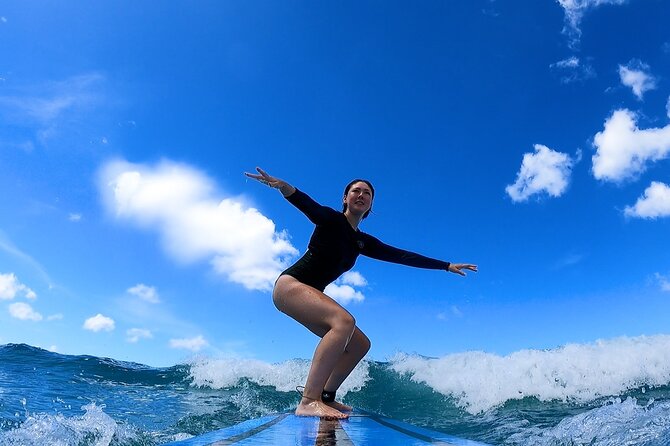
Two hours in Waikiki can change surfing forever. This private surf lesson on Oahu mixes coaching on shore with time in the water, so you’re not just watching—you’re learning by doing. You’ll also get practical surfing theory, plus the option to have your session captured on camera.
I like the high hands-on coaching angle. Lessons include land and water demonstrations of proper positions and proven techniques, and instruction is tailored to your ability level. I also like the realistic goal: you can ride up to 10–20 waves, and most beginners are able to stand up multiple times during their first lesson.
My main caution is the human factor. Most instructors seem to be supportive and effective, but there are scattered reports of poor communication and even refund problems, so you’ll want to protect your schedule with your confirmation details and calm follow-ups.
In This Review
- Key things I think matter most
- Where You Start on Waikiki: Meeting Point and First-Move Strategy
- The Lesson Flow: Land Demo, Applied Theory, Then Water Practice
- How Many Waves You’ll Get in 2 Hours (and Why It’s a Big Deal)
- What Your Instructor Should Be Watching for (Your Fast Track to Standing)
- Capturing Waikiki Surf: Camera Coverage and What to Plan For
- Who This Private Waikiki Lesson Fits Best
- Price and Value: When 2 Hours Makes Sense
- Red Flags to Keep in Mind Before You Paddle
- Should You Book This Waikiki Private Surf Lesson?
- FAQ
- Do I need prior surfing experience?
- How long is the Waikiki private surf lesson?
- Is this lesson private or shared?
- What’s the meeting point for the lesson?
- How many waves will I likely ride?
- Can the session be captured on camera?
- What happens if I cancel or the weather is bad?
Key things I think matter most
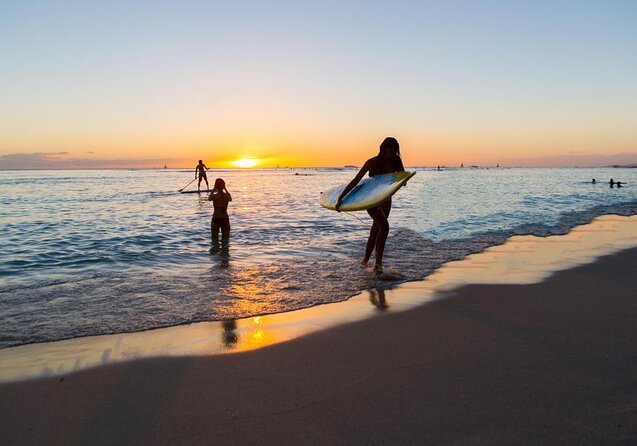
- Private, not crowded: Only your group participates, so you get more focused coaching time.
- Land + water teaching: You learn positions and technique twice—first on shore, then in the ocean.
- Beginner-friendly by design: No experience is required, and instructors aim for you to stand quickly.
- Wave time is the point: Plan for up to 10–20 waves over the two-hour session.
- Action on camera: Your lesson can be captured so you can share videos and photos afterward.
- Weather-dependent: The activity requires good weather, and rescheduling or refunds may apply if it’s canceled.
Where You Start on Waikiki: Meeting Point and First-Move Strategy
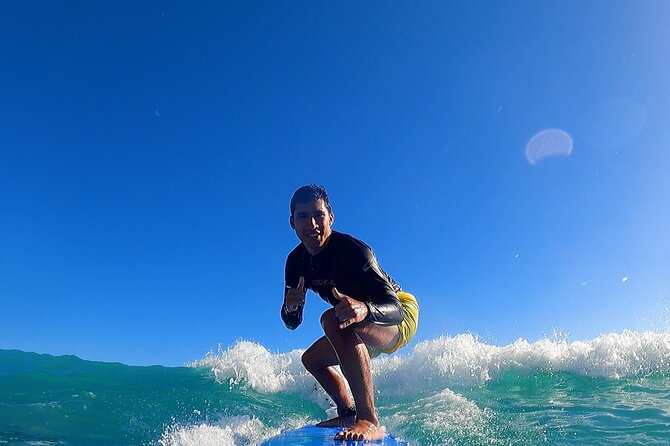
You meet at 2450 Prince Edward St, Honolulu, HI 96815, and the activity ends back there. That matters because Waikiki can feel like a maze. Having a clear start location helps you stay relaxed, arrive ready, and avoid wasting energy hunting for the group.
This is also listed as near public transportation, which is useful if you’re not renting a car. I’d still plan to arrive early. Not because you’ll be waiting forever, but because the ocean session goes better when you’re not rushing through prep.
One more practical note: the lesson is described as having a moderate physical fitness requirement. That doesn’t mean you need to be an athlete. It does mean you should be comfortable with paddling, wiping out, and getting up and down on uneven sand.
Catch the gentle Waikiki rollers, more lessons
- Open Group Surfing Lesson in Waikiki, Hawaii★ 4.5 · 582 reviews
- Oahu: Beginner-Friendly Waikiki Beach Surfing Lesson★ 4.9 · 425 reviews
- Surfing Lessons On Waikiki Beach★ 4.5 · 317 reviews
- Waikiki Private Group Surf Lesson★ 5.0 · 298 reviews
The Lesson Flow: Land Demo, Applied Theory, Then Water Practice
This surf lesson is built around a simple rhythm: learn positions, understand what to do, then try it immediately.
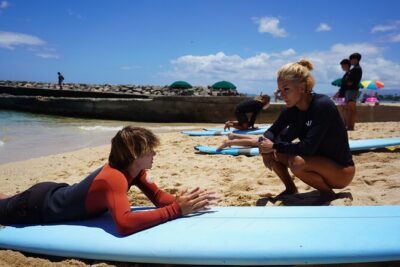
First, you get a land demonstration. The goal here is muscle memory without the chaos. Expect coaching on proper positions and technique fundamentals—how to place your body, how to control your balance, and what your actions should look like when a wave is coming.
Then you move to water demonstration. The instructor shows how those positions translate into real wave conditions. That bridge is key. Surfing isn’t just about strength; it’s about timing and body mechanics. Seeing it in the water prevents you from guessing.
You’ll also get some applied theory about surfing. The useful version of theory is not complicated. It’s the kind of stuff that helps you stop doing random things and start doing one or two correct things repeatedly.
If your instructor is doing their job well, you should feel something like this:
- you understand what to try before you paddle
- you get feedback after you attempt
- you try again with the lesson already in your head
How Many Waves You’ll Get in 2 Hours (and Why It’s a Big Deal)
The promise is straightforward: you can ride up to 10–20 waves in your two-hour lesson. That’s not just a marketing number—it’s the difference between a surf lesson that feels like an event and one that feels like real progress.
I like that the lesson is personalized to your abilities. That usually means you’re not stuck waiting while others learn different skills. You’re matched to conditions and your level, then moved through practice so you can keep building confidence.
The other big claim: 95%+ of students stand up many times during their first lesson. I’d treat that as a best-case target, not a guarantee. But it does tell you something important about how the lesson is organized. This isn’t a sit-and-hope structure. It’s set up for beginners to succeed quickly.
Two hours also gives you something people forget to plan for: rest. Surfing is tiring. Wiping out repeatedly can burn your energy. Having time to recover between attempts helps you keep your technique intact instead of turning every set into survival mode.
What Your Instructor Should Be Watching for (Your Fast Track to Standing)
A strong surf instructor doesn’t just tell you what to do once. They stay on you. In the instructor stories shared with the lesson, coaching is described as constant and safety-focused, with instructors checking in frequently and staying close during practice.
So here’s what you should expect to feel, if you’re in good hands:
- You’re pulled out toward the wave zone rather than left to figure it out alone.
- Your instructor gives clear, motivating guidance in short bursts.
- You get correction quickly, not after you’ve already repeated the wrong move 15 times.
- You’re encouraged after attempts, including the wipeouts.
This is where the private format helps. In a shared class, you can lose time waiting for someone else’s turn. With only your group, an instructor can keep adjusting your plan based on what you’re actually doing in the water.
It’s also why many first-timers do better than they expect. Surfing can feel scary before you understand the mechanics. Once someone helps you translate the lesson into your body, standing up can happen faster.
You might be taught by an instructor named Moki, Vance, Kaa’Aine (spelling may vary), Cody, or Kaine. Names like these show up in the instructor experiences people shared—so if you have a preference, it’s reasonable to ask who will be leading your session.
Let a local guide handle the day
- Moana’s Waikīkī Grand Guided Turtle Snorkel & Sailing Adventure
★ 4.5 · 936 reviews - Honolulu: Oahu Island Full-Day Guided Tour by Bus with Lunch
★ 4.6 · 506 reviews - Kailua 2-Hour Guided Kayaking Excursion, Oahu
★ 5.0 · 442 reviews - Chief’s Official Pearl Harbor Self-Guided Multimedia Tour
★ 4.0 · 407 reviews - Kailua Twin Islands Guided Kayak Tour, Oahu
★ 5.0 · 379 reviews
Capturing Waikiki Surf: Camera Coverage and What to Plan For
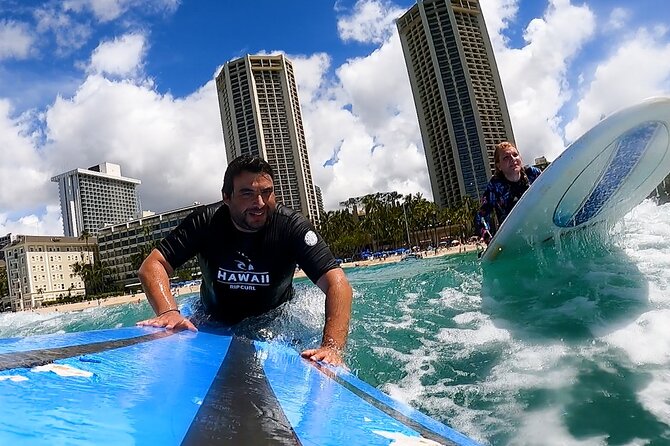
The lesson says surfing can be captured on camera, so you can share videos and photos afterward. For me, that’s more than a nice extra. When you’re learning, you don’t always remember what you did on each wave. A video makes it easier to see your stance, timing, and where you’re losing balance.
One of the experiences included a mention of a raw footage video package, which suggests you may not just get a quick photo. You might get more usable material to actually review (and rewatch the moments you stood up and thought, wait, I did that).
If you care about footage, do two things:
- ask upfront what you’ll receive (video only, photos only, or both)
- plan to charge your phone for the post-lesson sharing phase
Who This Private Waikiki Lesson Fits Best
This is built for beginners. It’s stated clearly that no surfing experience is necessary. That’s a big deal in Waikiki, where people sometimes expect you to already know the basics.
It also seems to work across ages and comfort levels. One experience focused on a first-time bucket list surfer at 59 years old, while another involved a 12-year-old who got one-on-one coaching and encouragement. Another couple did a 2-person lesson and felt well taken care of.
So this lesson tends to be a good match if you:
- want fast feedback and not a crowd
- feel nervous and want a plan to reduce uncertainty
- want to maximize wave attempts in a limited window
- like learning by doing, not by watching
It may be less ideal if you strongly prefer structured group classes or you’re expecting a long, slow introduction. This lesson is action-focused, and you’ll be paddling and trying throughout the session.
Price and Value: When 2 Hours Makes Sense
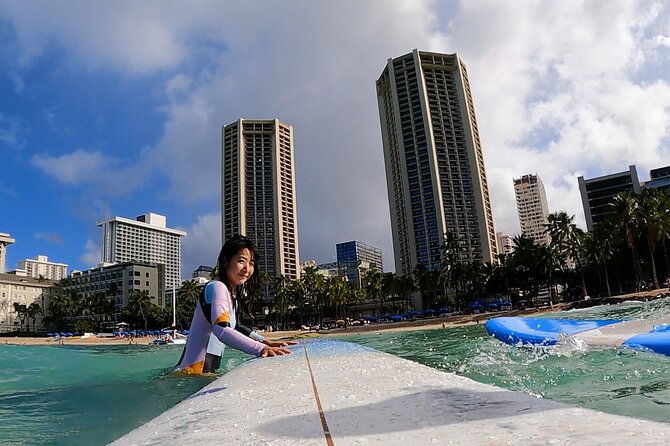
There’s no price listed here, so I can’t tell you whether it’s the cheapest option. But I can help you think about value in a way that actually matters.
For a two-hour lesson, value comes down to:
- wave-to-time efficiency (up to 10–20 rides)
- instructor attention (private instruction)
- success likelihood (standing up multiple times for most beginners)
- added keepsakes (camera capture, possibly video package)
If you’re paying for a lesson in Waikiki, you’re paying to reduce the learning curve. A private lesson is often worth it because you get fewer pauses and fewer missed cues. If the instructor is skilled and the lesson keeps moving, the experience can feel like you actually did something—not just attended something.
The one thing that can hurt value is if communication about timing or follow-through is weak. The lesson has generally positive coaching stories, but there are also reports about scheduling mix-ups and refund handling. That doesn’t mean the experience will be bad for you. It does mean you should treat your booking details seriously and keep proof.
Red Flags to Keep in Mind Before You Paddle
Let me be balanced. Many accounts of instruction here emphasize positive, supportive coaching—especially for first-time surfers. But a few accounts raise red flags around communication and refund processing.
Here’s how to protect yourself without turning the whole trip into a paperwork project:
- Keep your confirmation details and receipt information saved on your phone.
- If your lesson start time shifts, ask for clarity in writing (even simple text confirmation helps).
- If you cancel or if weather forces changes, keep the notice you receive and any follow-up messages.
If you’re the type who hates uncertainty, plan to arrive early and double-check your schedule the day before. That reduces the chance of a last-minute misunderstanding—especially in busy Waikiki where timing can get messy.
Should You Book This Waikiki Private Surf Lesson?
If you want a beginner-friendly, private surf session in Waikiki that prioritizes standing up and catching multiple waves, this is a strong candidate. The structure—land demonstration, applied theory, then water practice—makes sense for first-timers. And the promise of up to 10–20 waves within two hours is exactly what you’re hoping for when you’re investing time in Oahu.
I’d book if:
- you’re a beginner and want clear coaching
- you want lots of wave attempts in a short time
- you care about capturing footage for your own progress
I’d think twice if:
- you’re very sensitive to communication issues
- you need strict certainty on refunds in a specific timeframe
- you’re traveling with a tight schedule and can’t handle any rescheduling if weather changes
For most people, the upside is huge: you learn faster, you try more, and you get a real Waikiki memory you can watch later.
FAQ
Do I need prior surfing experience?
No. The lesson is designed for first-timers, and instruction includes land and water demonstrations of proper positions and techniques.
How long is the Waikiki private surf lesson?
It’s listed as about 2 hours.
Is this lesson private or shared?
It’s private. Only your group participates.
What’s the meeting point for the lesson?
You meet at 2450 Prince Edward St, Honolulu, HI 96815 and the activity ends back there.
How many waves will I likely ride?
The lesson says you can ride up to 10–20 waves, and it’s noted that most students stand up multiple times during their first lesson.
Can the session be captured on camera?
Yes. Surf lessons can be captured on camera, so you can share videos and photos afterward.
What happens if I cancel or the weather is bad?
Cancellation is free up to 24 hours in advance for a full refund. The experience requires good weather; if it’s canceled due to poor weather, you’ll be offered a different date or a full refund.
Easier With a Local Along





More Tour Reviews in Oahu





Learn to Surf at Waikiki





Just Reviewed: More Oahu Tours





Waikiki Surf Lessons, compared.
 ★ 4.5Open Group Surfing Lesson in Waikiki, HawaiiFrom $112582 reviews
 ★ 4.9Beginner-Friendly Waikiki Beach Surfing LessonFrom $125425 reviews
 ★ 4.5Surfing Lessons On Waikiki BeachFrom $129317 reviews
 ★ 5.0Waikiki Private Group Surf LessonFrom $123298 reviews
 ★ 5.0Surf Lessons on the North Shore of OahuFrom $95267 reviews
 ★ 5.0Family, Private & Group Surfing Lessons, Waikiki Courtesy ShuttleFrom $107216 reviews
 ★ 4.9Waikiki 2-Hour Beginner Group Surf LessonFrom $103191 reviews
 ★ 5.0Private Surfing Lessons in WaikikiFrom $96176 reviews
Where else this tour ranks