
Reviewed · HISTORICAL TOURS
Through A Glass Darkly The Strange and Tragic History Of Honolulu
Honolulu history can feel like trivia—this tour makes it make sense. I love how the guide, Terry, tells the bigger story in clear, human terms, not textbook summaries, and he leans into the parts that usually get skipped.
You’ll also enjoy the small-group pace through major sites in Honolulu’s core, with enough time at each stop to actually understand what you’re looking at. One thing to plan for: there’s quite a bit of standing and walking, so if mobility is an issue, take advantage of the help offered for stairs and inclines.
In This Review
- Key things that make this tour work
- Why This Honolulu History Walk Feels Personal
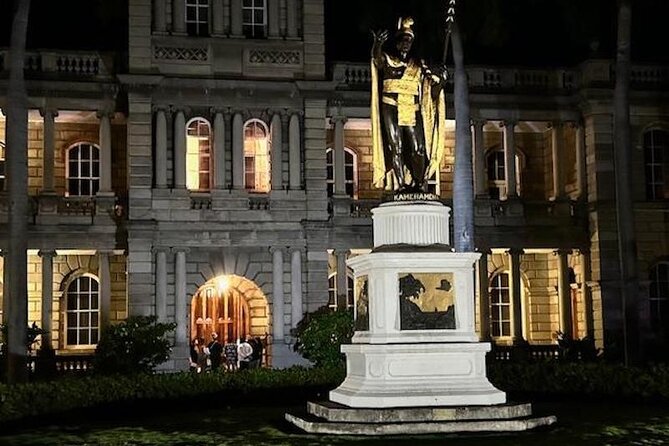
- Starting at King Kamehameha I Statue: The Setup You Wish You Had
- Iolani Palace: Seeing the Monarchy’s Drama in Real Space
- Kawaiaha’o Church: When Missionary Influence Shows Up in Stone
- Hawaiian Mission Houses Historic Site and Archives: The Good That Came With Power
- Honolulu Hale and the State Capitol: Architecture That Hides Its Story
- Washington Place: Queen Liliuokalani’s Home After Upheaval
- Cathedral of St. Andrew: England Stone, Hawaii Tragedy, Stained Glass Light
- Capitol Modern (Hawai‘i State Art Museum): The Original Royal Hawaiian Hotel
- Ali‘iolani Hale and the Massie Affair: Courts, Conflict, and Consequences
- What You Get for $39: Value in Context and Time
- Timing, Group Size, and How to Enjoy the Walk
- Who This Tour Best Fits
- Should You Book Through a Glass Darkly in Honolulu?
- FAQ
- How long is the Through A Glass Darkly Honolulu tour?
- Where does the tour start and end?
- Is the tour in English, and do I need a printout?
- How big is the group?
- Are admission tickets included for every stop?
- What’s the price per person?
- Is the tour easy to do with limited mobility?
Key things that make this tour work
- Terry’s storytelling ties together conquest, monarchy, and legal drama in plain language
- Focused stops at landmark buildings mean you learn what each place symbolizes
- A little spooky, on purpose, with ghost stories woven into the setting
- Free entry at most sites, but a couple spots may require separate admission
- Small group size (max 20) keeps the experience personal without feeling like a lecture
Why This Honolulu History Walk Feels Personal
This is the kind of tour that gives you context fast. You start with famous names and then watch those names turn into choices, consequences, and real power struggles—often the kind you don’t see in a standard overview.
At the center is the way the guide connects locations. You’re not just moving from building to building; you’re collecting clues about what changed Honolulu, who had influence, and how different communities were impacted.
And yes, there’s storytelling flavor here. Not scary-movie scary, but enough that the buildings feel like they remember things.
Old Honolulu after dark, more walks
- Honolulu Haunts: Ghosts and Spirits Walking Tour★ 4.2 · 169 reviews
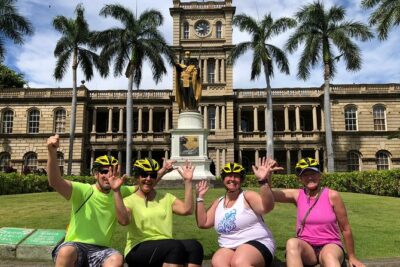
- Historical Honolulu Bike Tour★ 5.0 · 76 reviews
- Waikiki Night Marchers Ghost Tour★ 5.0 · 64 reviews
- Downtown Honolulu Food Tour with 5 Local Favorites Tastings★ 5.0 · 54 reviews
Starting at King Kamehameha I Statue: The Setup You Wish You Had
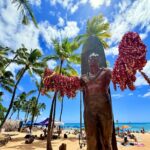
You meet at the King Kamehameha I Statue at 447 S King St, right in the heart of downtown. That first stop matters because it frames the whole walk: Oahu didn’t become what it became by accident, and the conquest story is central to the island’s political shift.
You’ll hear about Kamehameha’s drive and the conquest of Oahu. It’s one of those moments where you realize history has a cost—literal, painful costs—and that the usual “great leader” version is missing half the story.
Iolani Palace: Seeing the Monarchy’s Drama in Real Space
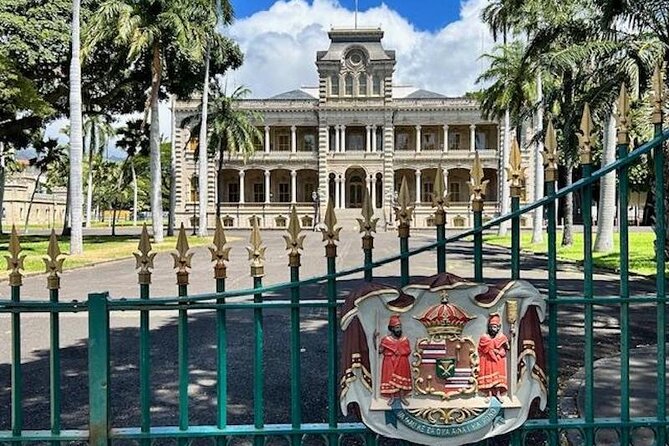
Iolani Palace is the moment where the big political story turns into something you can almost feel. The palace is in the U.S., yet it carries the weight of kings and queens, thrones, and a monarchy with its own systems, symbols, and identity.
What I like here is the way the story is explained as a tragedy with a clear arc. You don’t just get facts; you understand how the monarchy’s end wasn’t a clean break—it was an overthrow that reshaped power and people’s futures.
This stop isn’t throwaway time. You’ll spend enough moments inside the palace area to see why it’s such a powerful symbol, especially once the earlier conquest context is fresh in your mind.
Kawaiaha’o Church: When Missionary Influence Shows Up in Stone

From the palace’s royal gravity, the walk moves to Kawaiaha’o Church—often described like a simple “stone church,” but the story behind it is anything but simple. This church was designed by missionary Hiram Bingham, and that name gets brought into the conversation for a reason.
I like how this stop reframes the word missionary. It’s easy to assume mission work is only about charity. Here, you see how religious architecture also represented control, persuasion, and cultural pressure—especially to Hawaiians experiencing rapid change.
Even if you’re not religious, you’ll likely appreciate the way the guide explains how buildings can carry politics. The church becomes a lens, not just a landmark.
A few more Oahu tours to weigh up before you book:
- Pearl Harbor History Remembered Tour from Ko Olina
★ 5.0 · 1,009 reviews - Best Oahu Self-Guided Driving Audio Tour: Beaches, History & More
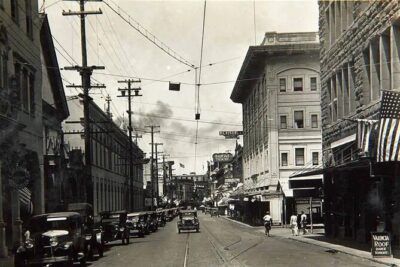
★ 3.5 · 10 reviews - Historical Tour of Downtown Honolulu in Red Light District
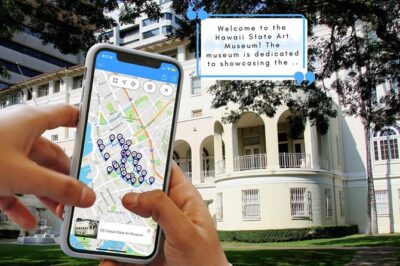
★ 4.5 · 8 reviews - Honolulu Historic District a Smartphone Audio Walking Tour
★ 4.0 · 6 reviews
Hawaiian Mission Houses Historic Site and Archives: The Good That Came With Power
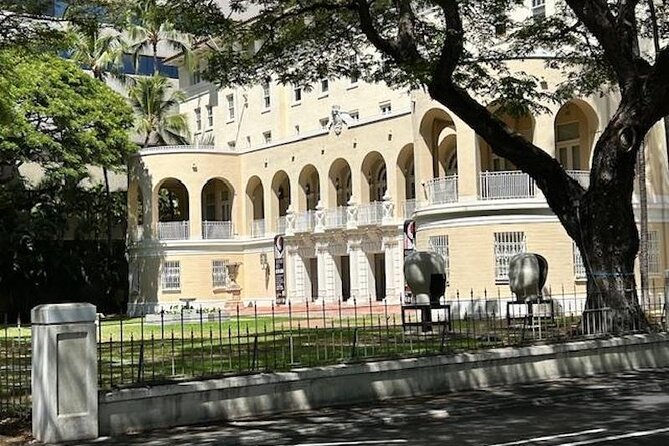
Next you visit the Hawaiian Mission Houses Historic Site and Archives. The tone shifts a little, because the story is more nuanced here.
You’ll get the theme that missionaries often believed they were doing good—and the site encourages you to treat that belief seriously. At the same time, the guide points out that doing good and holding influence aren’t mutually exclusive. In other words: the impact was real, but so was the imbalance.
This stop works especially well if you like history that includes contradictions. It’s not just “villains versus heroes.” It’s how complicated transformation can be.
Honolulu Hale and the State Capitol: Architecture That Hides Its Story
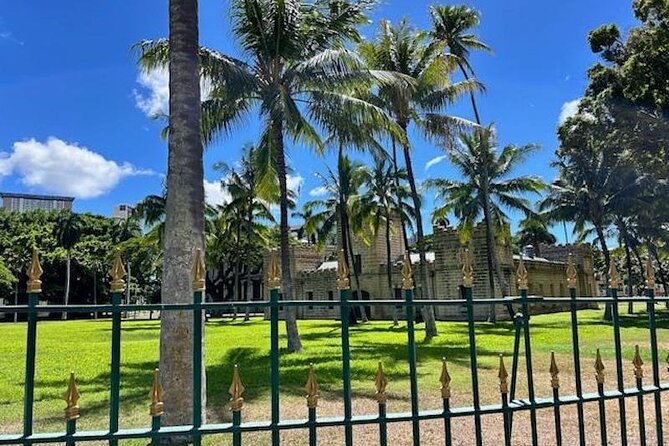
Honolulu Hale (City Hall) is a beautiful Italianate Spanish Colonial Revival building. That contrast is the lesson. You’ll see lovely details and then hear about an unlovely past, which makes you look twice at what you usually ignore.
Right after that, the walk heads to the Hawaii State Capitol. The building comes across as elegant and symbolic, and the guide connects it to the aloha spirit. There’s also a statue with a story tied to a queen who embodied that spirit—one more reminder that power and symbolism often live together in public spaces.
This is a good stretch for photos, but it’s also where you’ll start noticing patterns: the walk keeps showing you that institutions can be both beautiful and political.
Washington Place: Queen Liliuokalani’s Home After Upheaval
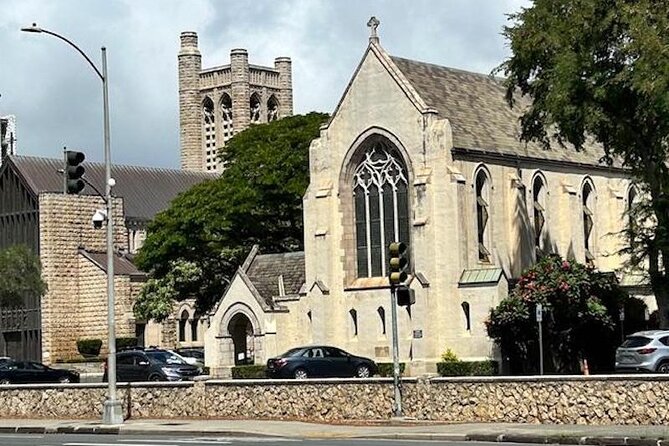
Washington Place is where the monarchy story turns personal. This was Queen Liliuokalani’s home, and you hear about her life there, including the unhappy marriage she lived with.
Then the narrative adds another layer: she returned there after the overthrow. That detail changes the feeling of the building. It’s no longer only royal nostalgia. It becomes a place of endurance after loss.
If you want one stop that emotionally anchors the entire walk, Washington Place is it.
Cathedral of St. Andrew: England Stone, Hawaii Tragedy, Stained Glass Light
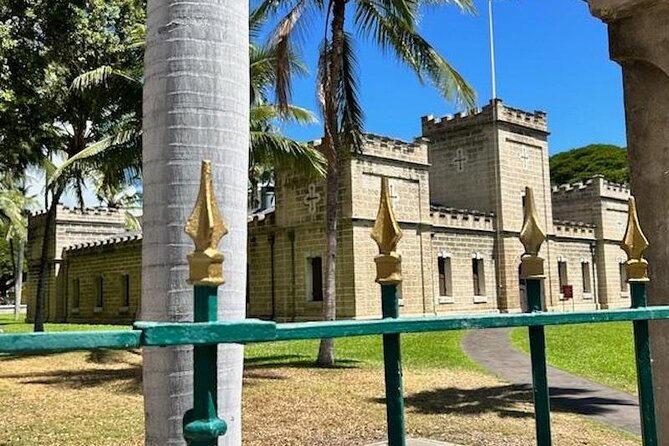
The Cathedral of St. Andrew is a visual payoff and a story reset. The building is made from thousands of blocks of sandstone cut in England and shipped to Hawaii, and you get a clear sense of how much effort went into bringing that material and style to the islands.
Inside, the stained glass nave is part of what makes this stop memorable. But the guide doesn’t let it stay purely aesthetic. There’s also a tragic tale of a king and his little boy woven into the narrative.
This is a nice reminder that many religious sites carry layered stories: sometimes personal, sometimes political, and often both.
And if you’re in the mood for the tour’s slightly spooky tone, this is also one of the places where those stories fit naturally.
Capitol Modern (Hawai‘i State Art Museum): The Original Royal Hawaiian Hotel
Capitol Modern is also known as the Hawai‘i State Art Museum, but before it was an art museum it was the Royal Hawaiian Hotel. You’ll hear that the original Royal Hawaiian was built in 1872, and that it was so successful a second Royal Hawaiian was built on Waikiki Beach—often referred to as the Pink Palace.
I like this stop because it brings you back to everyday Hawaii: not just crowns and courts, but hospitality, business, and the way visitors and money can shape a city’s image over time.
Even if art museums aren’t your main goal, the building itself is a story. You learn to read the past into the architecture.
Ali‘iolani Hale and the Massie Affair: Courts, Conflict, and Consequences
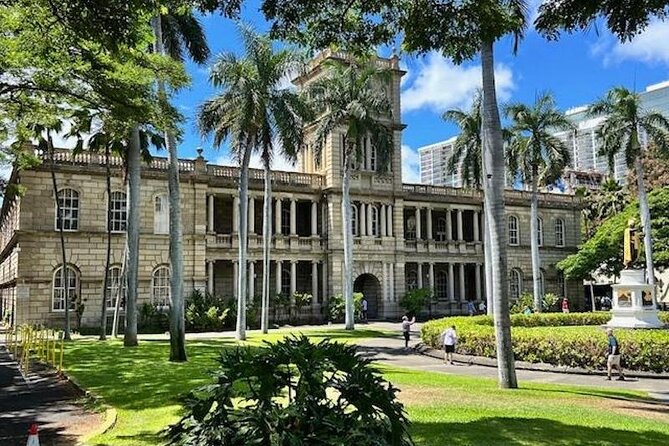
The walk finishes with Ali‘iolani Hale, now the Judiciary Building and home to the Hawaii State Supreme Court. This place carries legal weight, and the guide connects it to the Massie Affair—described as the marquee event of Hawaiian jurisprudence.
What I appreciate is that the tour doesn’t treat law like background noise. The story makes it clear that court cases can be turning points, and that legal conflict can reflect larger struggles over authority and fairness.
By this stage, you’ve seen monarchy challenged, institutions reshaped, and influence redirected. Ali‘iolani Hale ties those themes together with real stakes.
What You Get for $39: Value in Context and Time
At $39 per person for about 1 hour 30 minutes, this isn’t priced like a big production show. The value is the focus and the guidance—the kind of storytelling that makes the places click.
Most stops have free admission. The exceptions are Iolani Palace and Capitol Modern, where admission isn’t included. If you’re trying to control total costs, plan to budget for those entries.
Price-wise, I think it’s fair—especially if you’re a history lover who wants meaning, not just location names. Reviews also point to the guide as a big reason people feel satisfied, and that tracks with the structure of the tour: the narrative quality is doing a lot of the work.
Timing, Group Size, and How to Enjoy the Walk
This tour runs from 10:45 am and returns back to the start point. The group size is capped at 20, which helps keep it lively without turning into a crowded shuffle. It’s also offered in English with mobile tickets.
One practical tip: start hydrating early. Even if the walk feels short on paper, you’ll spend most of your time standing at key points, listening, then repositioning a few steps at a time.
If the weather turns, you’ll likely keep moving. Still, I’d treat it like a walking tour first. Wear shoes you trust. Bring a light layer. And if shade matters to you, you’ll want to pay attention to where the guide tries to place you during pauses.
Finally, book ahead if you can. This one tends to fill, with an average booking window around a month in advance. Free cancellation is available if your plans change, as long as you cancel at least 24 hours before start.
Who This Tour Best Fits
This walk is for you if:
- You want Hawaiian history that connects politics, religion, and law into one chain of cause and effect
- You like a guide who tells stories in a straightforward way, with humor and a human tone
- You’re ready to see Honolulu’s landmark sites as part of one story, not isolated attractions
It may not be your best match if you strongly prefer minimal standing, or if you want only cheerful sightseeing. This tour holds tragedies, conquest, and loss as part of the island’s real history.
Should You Book Through a Glass Darkly in Honolulu?
I’d book it if you’re spending limited time on Oahu and you want your landmarks to mean something. The places you visit are already famous, but the guide’s framing gives you the missing bridge between them: how power moved, how identities were reshaped, and how public buildings can carry private consequences.
If you’re on the fence because you worry about the tone, think of it this way: it’s a history walk that doesn’t pretend the past was tidy. That honest perspective is exactly what makes it feel worthwhile.
Go in with comfortable shoes and an open mind. You’ll come away seeing Honolulu with sharper eyes.
FAQ
How long is the Through A Glass Darkly Honolulu tour?
It’s approximately 1 hour 30 minutes.
Where does the tour start and end?
It starts at the King Kamehameha I Statue at 447 S King St, Honolulu, HI 96813, and it ends back at the meeting point.
Is the tour in English, and do I need a printout?
The tour is offered in English, and you receive a mobile ticket.
How big is the group?
The tour has a maximum of 20 travelers.
Are admission tickets included for every stop?
Most stops have free admission, but Iolani Palace and Capitol Modern list admission as not included.
What’s the price per person?
The price is $39.00 per person.
Is the tour easy to do with limited mobility?
Assistance is available for those who need help with stairs or inclines, and the tour is near public transportation. Service animals are allowed.
Honolulu of Old





More Tour Reviews in Oahu





Old Honolulu After Dark



Just Reviewed: More Oahu Tours






Historical Tours, compared.
 ★ 5.0Pearl Harbor History Remembered Tour from Ko OlinaFrom $1541,009 reviews
 ★ 5.0Historical Honolulu Bike TourFrom $14976 reviews
 ★ 3.5Best Oahu Self-Guided Driving Audio Tour: Beaches, History & MoreFrom $1610 reviews
 ★ 4.5Historical Tour of Downtown Honolulu in Red Light DistrictFrom $608 reviews
 ★ 4.0Honolulu Historic District a Smartphone Audio Walking TourFrom $106 reviews
Where else this tour ranks