
Reviewed · E-BIKE & CYCLING TOURS
Historical Honolulu Bike Tour
Honolulu has a lot to teach you fast. This 4 to 5 hour bike tour is a practical way to see the big landmarks and the everyday corners of Oahu without fighting traffic or parking, with a guide telling you the stories as you pedal. You roll from Waikiki toward Chinatown and downtown, then finish with signature stops like Aloha Tower, Kaka’ako murals, and an easy look at royal-era sites.
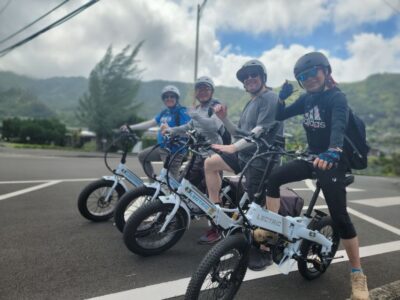
Two things I really like are the small-group limit (max 10) and the focused safety setup—bikes and helmets are provided, plus regular photo and rest stops. The route is mostly flat, and the guide keeps a pace that feels active without turning it into a workout test.
One consideration: you’re riding about 13.5 miles on a warm morning (and the tour runs in all weather). If you’re sensitive to heat, rain, or you prefer slower sightseeing, you’ll want to dress for conditions and be ready for a real bike ride, not a casual stroll.
In This Review
- Key highlights worth caring about
- A morning bike route that strings together Honolulu’s eras
- Meeting at Kuhio Beach and rolling past Waikiki the easy way
- Waikiki-to-zoo section: energy plus quick context
- Ala Wai canals and waterfront routes you’d skip without a guide
- Neal S. Blaisdell Center and the Elvis last-show stop
- Mission Houses Historic Site: early architecture and Hawaiian-language printing
- Practical note
- Kawaiaha’o Church: coral stone craftsmanship and a real service schedule
- What to expect
- King Kamehameha Statue and the meaning of gold paint
- Iolani Palace and the only royal palace on US soil
- Drawback to keep in mind
- Hawaii State Capitol: open-air politics and a super-natural twist
- Aloha Tower Marketplace: the elevator ride and the harbor view payoff
- Kaka’ako street art and Magic Island’s reclaimed-land story
- Chinatown and downtown fruit stops: taste without the time sink
- Final stretch by the Convention Center’s ficus-lined path
- What’s included, what to bring, and how to get the most out of the ride
- Bring
- Price and value: is $149 a fair deal for this route?
- Who should book this Honolulu bike tour (and who should think twice)
- Should you book it?
- FAQ
- How long is the Historic Honolulu Bike Tour?
- How far will I ride?
- Where do I meet, and where does the tour end?
- What time does the tour start?
- What’s the maximum group size?
- Are bikes and helmets included?
- What’s included for food and drinks?
- Does the tour operate in bad weather?
Key highlights worth caring about
- Small-group cap of 10 keeps the narration personal and the ride calmer
- Helmets + bikes provided means you can travel lighter and focus on riding
- Aloha Tower elevator ride gives you a real view payoff without complicated logistics
- Kaka’ako street art stops add a creative, modern Honolulu layer
- Chinatown fruit sampling lets you taste local flavor on the move
- Photo support from the guide can help you get shots even if you travel solo
A morning bike route that strings together Honolulu’s eras
If you like your sightseeing with movement, this tour is a smart fit. You start early at Kuhio Beach (2453 Kalākaua Ave, Waikiki) around 7:00am, which helps you beat crowds and get more done before the day heats up. The plan is built around connecting different “Honolulu neighborhoods” in a way that feels cohesive: beaches and parks, then civic and royal landmarks, then downtown energy, and finally the modern art and ocean-adjacent vibe.
What makes it especially interesting is the way the guide ties places together. You’re not just rolling past famous names. You’re getting the why behind them—how Waikiki’s landmarks fit into surf culture, how canals and waterfront development shaped the city, and how royal sites connect to the Hawaiian kingdom story. It’s history you can see with your own eyes, right where it happened.
The pacing is also tuned for real people. Expect frequent stops for photos, rest breaks, and short context moments, so you don’t feel like you’re “riding only.” One of the best parts is that the ride stays mostly flat, which makes this feel doable for many visitors with moderate fitness.
The island on two wheels, a few more rides
- Diamond Head Bike to Hike and Local Lunch★ 5.0 · 181 reviews
- Kualoa Ranch: Novice E-Bike★ 4.5 · 128 reviews
- Electric Bike Ride & Diamond Head Hike Tour★ 5.0 · 125 reviews
- Historical Honolulu Bike Tour★ 5.0 · 76 reviews
Meeting at Kuhio Beach and rolling past Waikiki the easy way
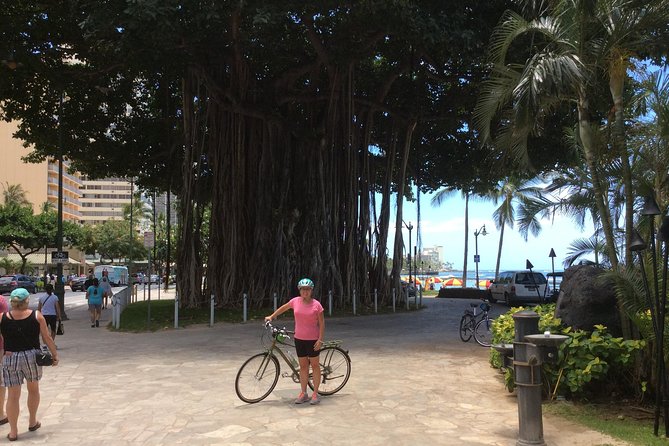
Your morning begins at the Kuhio Beach Hula Mound at Waikiki Beach. This is a great starting point because it anchors the tour in the exact area visitors picture when they think Honolulu. The guide sets the stage with quick background on the beach, including the Free Hula shows and the historic banyan tree that shades the area.
Then you’re off, moving along the beachfront corridor and into areas where the city starts to show its layers. One of the practical wins of a bike tour here is that you can cover ground quickly while still seeing details—signs, storefronts, street life, and the way neighborhoods grade into each other.
Waikiki-to-zoo section: energy plus quick context
You’ll pass the Honolulu Zoo, which is known for having over 1,000 critters. You’re not doing a zoo visit. You’re getting a guided “big picture” view as you ride by, which is perfect if you don’t want to spend another ticketed day indoors but still want to understand what you’re looking at.
From there the tour edges toward the Ala Wai area, with narration along the way. It’s a good segment for easing into the day: you get motion, you get ocean-adjacent views, and you learn without feeling like you’re stuck listening the whole time.
Ala Wai canals and waterfront routes you’d skip without a guide
A major reason this tour works is the route uses water-adjacent corridors that many people don’t naturally explore on foot. You’ll learn about the Ala Wai Canals, a waterway developed in 1929, and you’ll hear what the landmark has been doing in the past, in the present, and in the future.
That context matters because it changes how you see the canal. On a bike, the canal isn’t just scenery—it becomes a timeline you ride next to. You’re able to notice how it sits in the city and how it shapes movement and views.
You’ll also reach areas along the promenade, then head toward the shoreline zone that includes Magic Island later. The overall feeling in this stretch is “Honolulu beyond the hotel strip.” You still get iconic views, but you also see how people live along the water.
Old Honolulu after dark, more walks
- Honolulu Haunts and Hauntings Ghost Tour
★ 4.5 · 170 reviews - Honolulu Haunts: Ghosts and Spirits Walking Tour
★ 4.2 · 169 reviews - Historical Honolulu Bike Tour
★ 5.0 · 76 reviews - Waikiki Night Marchers Ghost Tour
★ 5.0 · 64 reviews - Ghosts of Old Honolulu Walking Tour
★ 4.5 · 53 reviews
Neal S. Blaisdell Center and the Elvis last-show stop
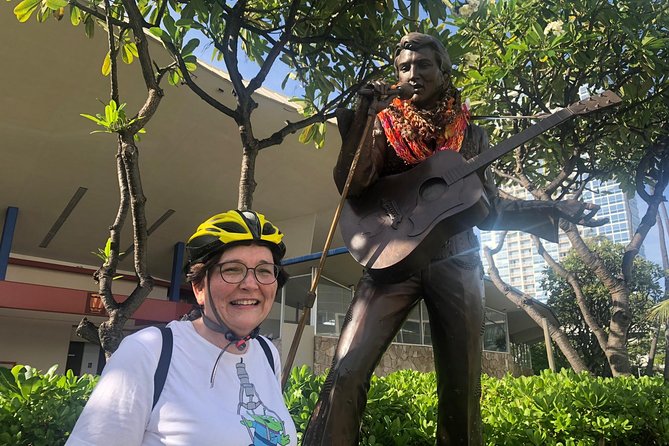
One of the most fun points on the route is the stop at the Neal S. Blaisdell Center. The guide brings you to the spot connected with Elvis Presley’s famous 1973 Aloha From Hawaii event—described here as his last concert. There’s also an Elvis statue that people tend to find striking, especially if you’re a pop-culture fan.
What I like about this stop is that it isn’t treated like a tack-on photo op. You learn that many major performers have shared the venue, with references to names like Prince, Sting, Jack Johnson, Janet Jackson, and others. It’s a quick reminder that Honolulu isn’t only about surf and royal history—it also holds a strong place in modern entertainment.
If you’re traveling with mixed interests (someone who wants history and someone who wants fun), this kind of stop is a peace treaty.
Mission Houses Historic Site: early architecture and Hawaiian-language printing
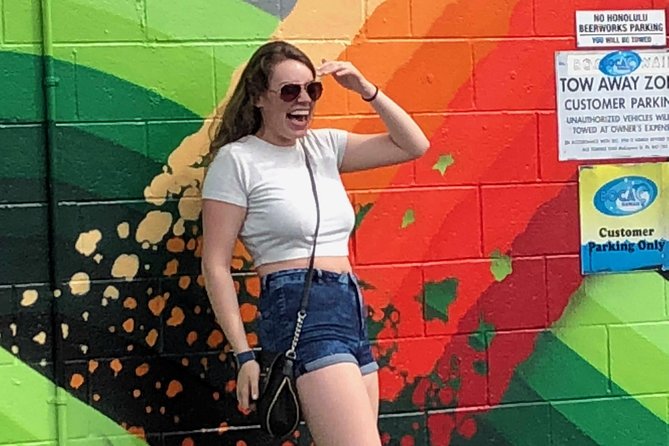
Next is the Hawaiian Mission Houses Historic Site and Archives, where you get a fast lesson on early Western-style building in Hawaii. The tour notes that Hawaii’s first western-style home was brought in by a ship and constructed by the Hall Missionary family. It’s the kind of detail you’d miss if you just biked past.
Then there’s a detail that really sticks: a printing press that printed the first Bible in the Hawaiian language. Even if you only spend a few minutes at this stop, that one fact gives you a sharper sense of how language, religion, and power moved through the islands.
Practical note
This is a short viewing stop. You won’t be doing a long museum-style visit on the bike tour. Still, it’s a great way to decide whether you want to come back later for deeper reading.
Kawaiaha’o Church: coral stone craftsmanship and a real service schedule
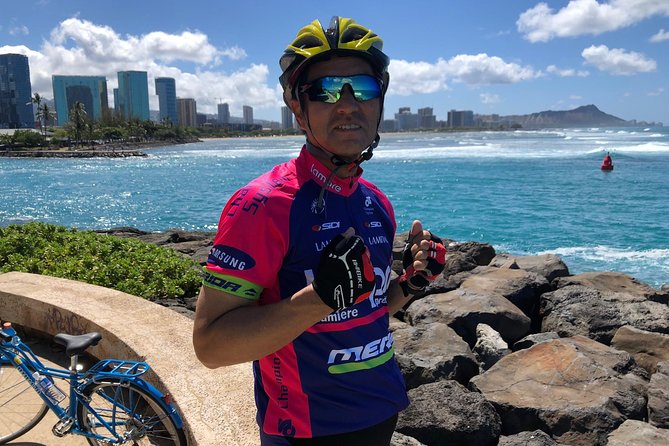
The stop at Kawaiaha’o Church focuses on construction detail. The tour highlights that over 14,000 coral stones were used to build this landmark. That’s not just trivia—it helps you understand why the church is such a visual focal point in downtown Honolulu.
The guide also shares that the church welcomes visitors every Sunday for an 8:30am church service. If you happen to be in town on a Sunday and want a cultural moment that’s more than sightseeing, this fact helps you plan.
What to expect
You’ll roll by, stop briefly, and get the story. If your group is on time, the stop length stays short. If you want a longer look, you can treat this as the “hook” and plan an optional follow-up afterward.
King Kamehameha Statue and the meaning of gold paint
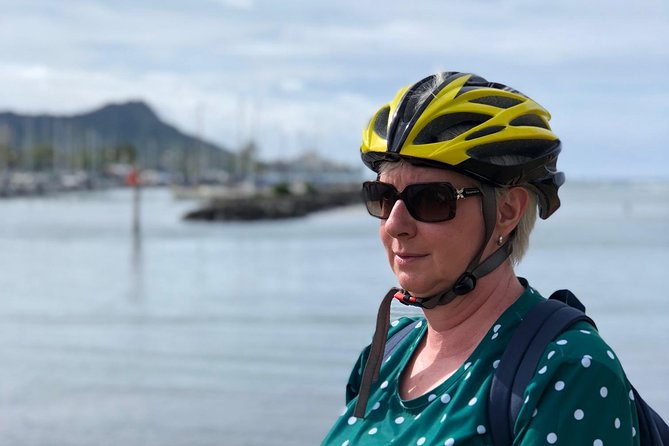
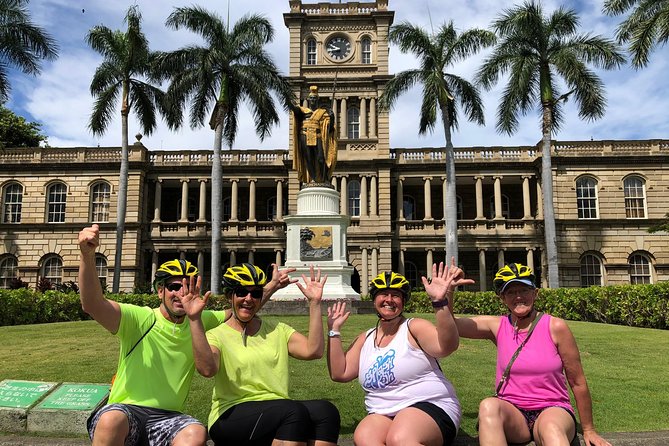
The tour includes the King Kamehameha Statue, representing the king who united the islands. The narration also points out a recent refurbishment with real gold paint, meant to show his power as a leader.
There’s also a modern connection: the statue appears in the opening scenes of Hawaii Five-0. That matters because it bridges old-world symbolism and today’s visual culture. You see the same landmark through two lenses.
From a rider’s perspective, this stop is a nice balance—history plus a recognizable pop-culture tie-in.
Iolani Palace and the only royal palace on US soil
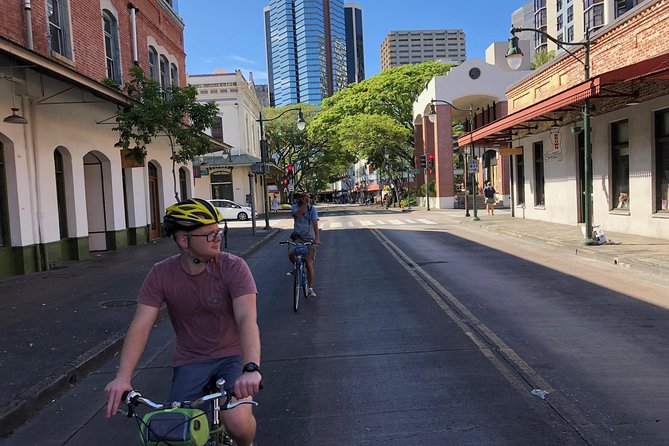
If you care about royal-era Hawaii, the quick stop at Iolani Palace is a highlight. The tour describes it as the royal residence of rulers of the Kingdom of Hawaii and calls out two major credentials: it’s the only royal palace on US soil and it’s a National Historic Landmark listed on the National Register of Historic Places.
That’s a lot of official status for a stop you only spend a few minutes at. Still, those labels help you anchor what you’re looking at. This is one of those places where you can stand for five minutes and instantly understand why it matters.
Drawback to keep in mind
Because you’re on a bike tour, you won’t have the kind of slow, unhurried time you might want for close architectural details. Think “guided introduction” rather than “full palace visit.” If you’re a deep-explorer type, you’ll likely want to return on another day.
Hawaii State Capitol: open-air politics and a super-natural twist
The route rolls through the Hawaii State Capitol, constructed in 1969 and described as the only open-air capitol in the USA. That open-air design is part of why the building feels different from most statehouse stops.
The guide also nods to Hawaii’s known “super natural powers,” referencing Manna in the tour context. Even if you don’t treat that as something strictly factual in a modern sense, it’s a useful way to understand how concepts of power and spirit show up in place-making and storytelling.
This is another short stop, but it adds variety. You go from royal sites into civic space, then onward toward waterfront views.
Aloha Tower Marketplace: the elevator ride and the harbor view payoff
If there’s one moment that feels like a reward for riding, it’s the Aloha Tower Marketplace stop and the ride up Aloha Tower via the first elevator in the Pacific, as described on the tour.
You’re basically getting a viewpoint without complicated planning. The guide frames the experience by asking you to imagine early 1900s arrivals—greeting family and friends as ships came into the harbor. That kind of mental movie helps the view land differently. You’re not just looking at a skyline; you’re looking at a harbor that once made its living moving people and goods.
From the top, you’ll also learn about the surrounding waters, including fish stock and clear waters and healthy coral life (as described). It’s a neat reminder that Honolulu’s “big view” includes real marine life.
Then you roll onward toward the neighborhoods that look more street-level and artistic.
Kaka’ako street art and Magic Island’s reclaimed-land story
A big chunk of what makes this tour feel fun isn’t only famous monuments—it’s color and creativity. You’ll reach Kaka’ako, described as a district with murals and artists’ work on unique mural walls. The tour notes it’s expected to develop significantly in the future, even comparing it to the Dubai idea of growth in the Pacific.
Even if development talk isn’t your thing, the street art stop is. It’s an easy photo zone, and the guide helps you find good angles and moments for pictures.
Next comes Magic Island, part of Ala Moana Park, described as the People’s Park. The tour points out that the park was constructed in 1947 to turn an unsightly landfill into a public space. Magic Island is a reclaimed land-mass, and you’ll get the “why it exists” story as part of the ride.
I like this stop because it shifts you from “old Honolulu” into “modern Honolulu engineering and public space.” On a bike, you can keep moving while still learning how the shoreline was reshaped.
Chinatown and downtown fruit stops: taste without the time sink
Between the royal/civic section and the modern parks, the tour includes a stop to sample exotic fruits in Chinatown and downtown. This is the kind of practical add-on that makes a bike tour feel like more than transportation.
You’re already stopping regularly for photos and rest. So a taste stop fits naturally without breaking the flow. If you like trying new flavors but don’t want to spend time searching menus, this is a good compromise.
One smart tip: if you’ve got a sensitive stomach, eat lightly beforehand. Fruit is usually easy, but you’ll be riding again right after.
Final stretch by the Convention Center’s ficus-lined path
Near the end, you’ll roll along a pathway covered by dozens of ficus trees behind the Hawaii Convention Center. It’s a simple visual payoff and a gentle winding down before you return to the meeting point.
This final stretch matters because it keeps the ride from feeling like a “hard finish.” You end with shade and a calmer feel, and you can still process what you just learned instead of feeling totally cooked.
What’s included, what to bring, and how to get the most out of the ride
This tour includes bottled water, snacks, and helmet + bicycle use. It also includes National Park fees. In one guide-run experience described in the feedback, riders also received Gatorade, so it’s worth expecting you’ll be well covered on hydration.
The tour distance is about 13.5 miles, and the terrain is mostly flat. Still, you’ll feel it over a 4 to 5 hour morning because there’s motion, stops, and re-mounting the bike. If you’re new to riding or you haven’t ridden in a while, aim to arrive rested.
Bring
- Sun protection (even in the morning, Waikiki sun is real)
- A light layer for possible morning chill
- Rain gear if skies look questionable, since the tour runs in all weather conditions
- A small camera or phone strap for easier photo stops
And one rider-friendly hack: if you don’t travel with a second person to take photos, this tour style often helps because the guide takes pictures during the ride. In feedback, guides even provided photo downloads and a video collage for the experience.
Price and value: is $149 a fair deal for this route?
At $149 per person for roughly 4 to 5 hours and about 13.5 miles, the value comes down to what you’re buying besides the bike. You’re paying for:
- A guided route that connects multiple Honolulu zones efficiently
- A real “story layer” at big stops like Iolani Palace and Aloha Tower
- Safety and comfort support (helmets, regular rest breaks, and a guide controlling the flow)
- Included snacks and bottled water, which matters when you’re out all morning
If you’d otherwise rent a bike, you’d still need a plan for where to ride and what to learn at each stop. This tour solves the planning problem. It also stays small—capped at 10—which tends to improve how much attention you get at stops and how smoothly the group moves.
At the same time, it’s not a bargain if you only want a “casual pass-by.” This ride has real mileage and a structured pace, so you’ll get the best value if you’re ready to ride and listen.
Who should book this Honolulu bike tour (and who should think twice)
This tour fits you best if you:
- Want a high-efficiency way to see Honolulu in one morning
- Prefer guided storytelling over reading it later
- Like photos and don’t always have someone to take them
- Are okay with a moderate physical effort over a mostly flat route
- Enjoy mixing classic landmarks with modern street art and waterfront parks
Think twice if:
- You hate riding in the rain or you can’t handle weather changes
- You want long, unhurried museum time at royal or church sites
- You need a very slow pace for comfort
Should you book it?
Yes—if you’re landing in Honolulu and want a guided, efficient route that covers Waikiki, Chinatown, royal sites like Iolani Palace, and the Aloha Tower view in one go. The blend of flat riding, frequent stops, and clear storytelling makes it feel worth the time, and the small-group cap keeps it from turning into a noisy bike crowd.
If your top priority is deep museum time, you might pair this with a follow-up day for the places that grab you. But as an opener to Honolulu, this tour gives you a strong first impression—and it saves you from spending your vacation day figuring out how to connect all these neighborhoods yourself.
FAQ
How long is the Historic Honolulu Bike Tour?
It runs about 4 to 5 hours, depending on the pace of the group and conditions on the day.
How far will I ride?
The riding distance is about 13.5 miles.
Where do I meet, and where does the tour end?
You meet at Kuhio Beach at 2453 Kalākaua Ave, Honolulu, HI 96815. The tour ends back at the same meeting point.
What time does the tour start?
The start time is 7:00am.
What’s the maximum group size?
The tour is capped at a maximum of 10 travelers.
Are bikes and helmets included?
Yes. Bike and helmet use are included.
What’s included for food and drinks?
You get bottled water and snacks included. Food and drinks are otherwise not included unless specified.
Does the tour operate in bad weather?
It operates in all weather conditions, and you should dress appropriately. If it’s canceled due to poor weather, you’ll be offered a different date or a full refund.
More Tour Reviews in Oahu


Old Honolulu After Dark


The Island on Two Wheels

Just Reviewed: More Oahu Tours

E-Bike & Cycling Tours, compared.
 ★ 5.0Diamond Head Bike to Hike and Local LunchFrom $159181 reviews
 ★ 4.5Kualoa Ranch: Novice E-BikeFrom $140128 reviews
 ★ 5.0Electric Bike Ride & Diamond Head Hike TourFrom $199125 reviews
 ★ 5.0Electric Bike Ride & Manoa Falls Hike TourFrom $199101 reviews
 ★ 5.0eBike Tour Honolulu RainforestFrom $12873 reviews
 ★ 5.0Diamond Head Electric Bike Scenic TourFrom $14947 reviews
 ★ 4.9Waikiki E-Bike Ride and Manoa Falls HikeFrom $19928 reviews
 ★ 4.5Beer Lover’s Bike Tour of Honolulu27 reviews
Where else this tour ranks