
Reviewed · WAIKIKI SURF LESSONS
Oahu: Surfing Lessons for 2 People
Learning to surf is easier when you get the right coaching. This two-hour Oahu lesson puts you on the south shore with a tight student-to-instructor ratio and lots of time actually riding, not just standing around.
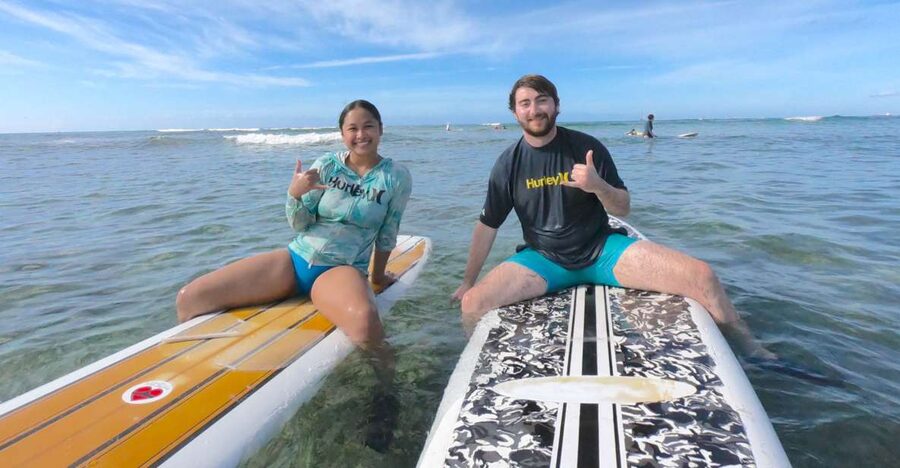
What I love here is the mix of short dry-land instruction (20–30 minutes) plus 70+ minutes in the water, so you build confidence fast. Second, you’re kitted out with real surf-school gear from Hurley, including a rash guard, reef shoes, a leash, and a surfboard, which means less hassle and better comfort from minute one. The one thing to consider is that photos/videos cost extra if you want them.
This is a great fit if you’re an adult or teen (12+) who wants a fun, guided start. It’s also a reminder that this isn’t designed for everyone: the lesson isn’t suitable for children under 12, pregnant women, or wheelchair users.
In This Review
- Key highlights that matter
- South Shore waves + a lesson built for first-timers
- Gear check: what’s included (and what that saves you)
- The 2-hour flow: from dry land basics to 70+ minutes on the board
- Small ratios: why you feel coached, not waved off
- Ocean safety and lifeguard-certified instruction (the unglamorous part that helps you enjoy it)
- What happens during the waves: technique plus real attempts
- Photos and videos: plan for optional extra costs
- Who this surf lesson is best for (and who should look elsewhere)
- Meeting point and gear-ready logistics along the ocean
- Price and value: $162 per person for real coaching time
- Should you book this Oahu surf lesson for two?
- FAQ
- How long is the Oahu surfing lesson for two people?
- How much time do we spend in the water?
- Is the surf lesson beginner-friendly?
- What equipment is included in the lesson price?
- What should I bring with me?
- Are beach towels included?
- Do they offer photos or video?
- What languages do the instructors speak?
Key highlights that matter
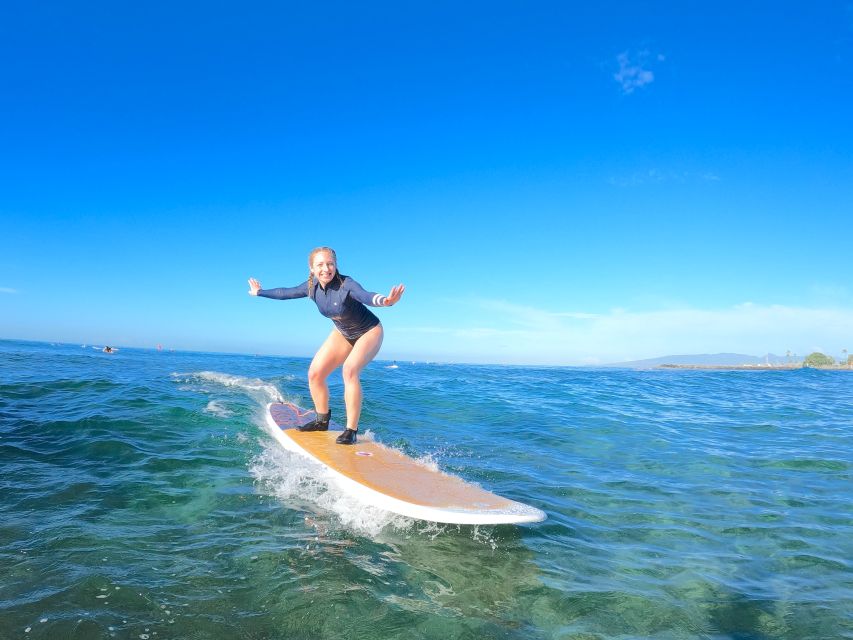
- Long water time: over 70 minutes after a 20–30 minute basics session on land
- Tight coaching: the lesson is promoted with a tight ratio (listed as 3:1, and described as 2:1 for water coaching)
- Hurley-sponsored surf setup: rash guard, reef shoes, leash, and board included
- Certified safety-first instructors: all instructors are certified lifeguards
- A souvenir included: a complimentary Aloha gift from the surf lesson
South Shore waves + a lesson built for first-timers
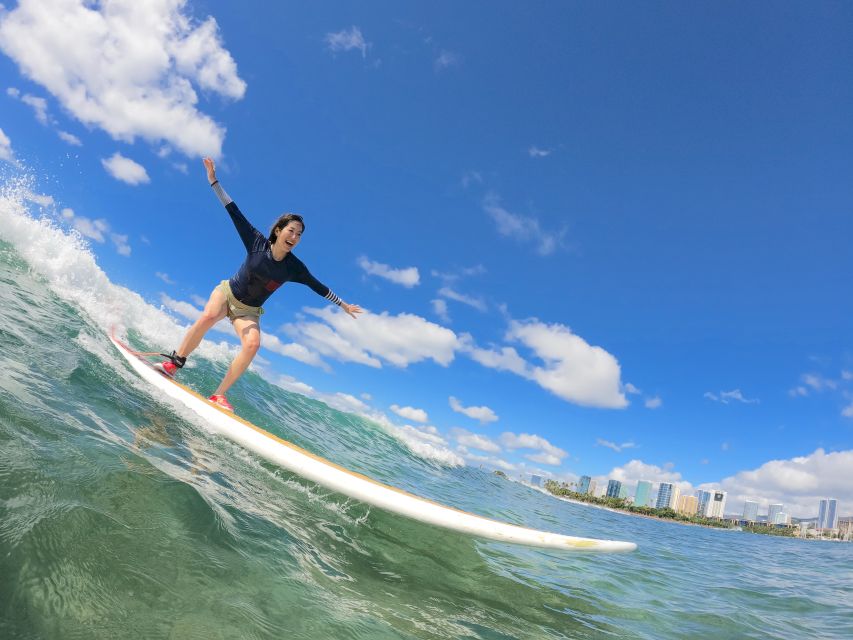
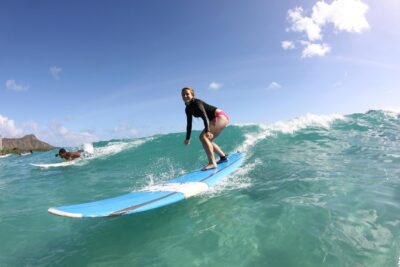
Oahu’s south shore is one of the most practical places to learn. The point of a good surf lesson isn’t just to teach technique. It’s to help you understand the ocean enough to stand up without panicking. This experience is designed around that goal: warm Pacific water, clear coaching, and a format that gets you into wave time quickly.
The structure is also smart for couples. You’re not doing a “tour of surfing” where you watch others ride and hope it eventually becomes your turn. You’re there to learn, and the schedule reflects it: dry-land basics first, then a long stretch in the water to practice what you were taught.
The vibe is upbeat too. Instructors are certified lifeguards and are described as friendly, patient, and genuinely into making it fun. One standout example from the feedback is Noah, praised for patience and encouragement—especially helpful when you’re learning how not to fight the board the second you feel a wave start to push you.
Catch the gentle Waikiki rollers, more lessons
- Open Group Surfing Lesson in Waikiki, Hawaii★ 4.5 · 582 reviews
- Oahu: Beginner-Friendly Waikiki Beach Surfing Lesson★ 4.9 · 425 reviews
- Surfing Lessons On Waikiki Beach★ 4.5 · 317 reviews
- Waikiki Private Group Surf Lesson★ 5.0 · 298 reviews
Gear check: what’s included (and what that saves you)
Surf lessons can be expensive in the hidden ways—gear rental, last-minute shopping, or showing up in the wrong shoes. This one reduces that stress by providing a full kit.
You’ll get:
- Surfboard
- Leash
- HURLEY rash guard
- Reef shoes
- Instructor support
- Wetsuits are optional (you can use one if conditions call for it)
That matters because reef shoes and a leash are not just comfort items. They’re safety and traction. Reef shoes help you move over slippery areas and get stable footing before you even paddle. A leash is the difference between staying connected to your board and losing it during wipeouts.
You’ll also receive a complimentary Aloha gift as a surf souvenir. It’s small, but it’s the kind of included keepsake that feels right after a lesson rather than something tacked on at the end.
If you’re thinking about what to bring, keep it simple: swimwear, a towel, sunscreen, water, and a change of clothes. Since you’re in Hawaii, you’ll still want to protect your skin like you mean it—especially when you’re out in the sun for most of the session.
The 2-hour flow: from dry land basics to 70+ minutes on the board
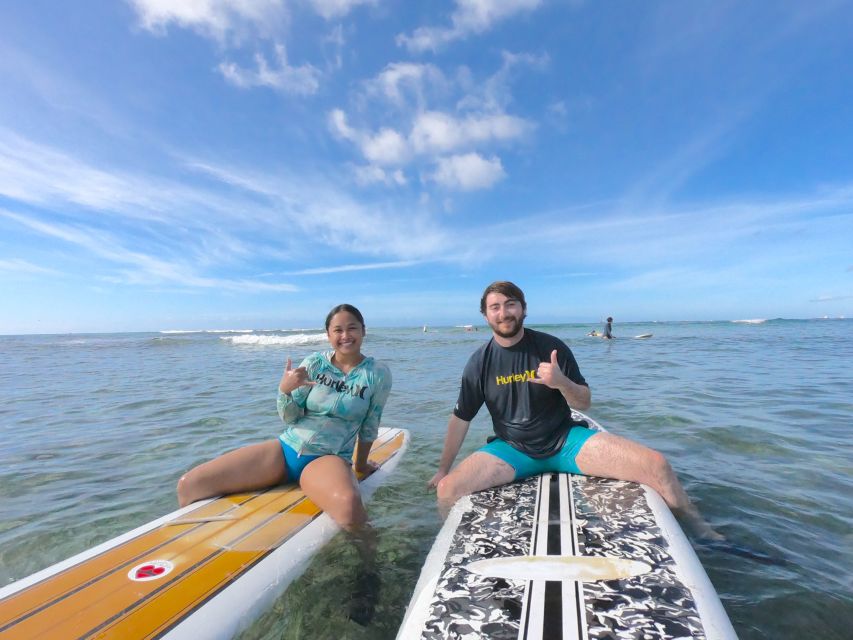
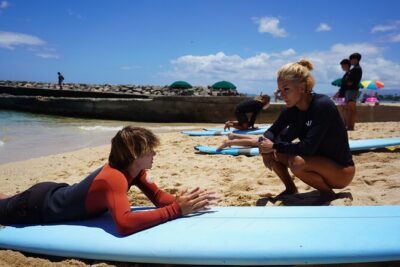
The lesson is built like a short training block, followed by practice time. Total duration is about 2 hours, with 20–30 minutes of dry-land instruction and over 70 minutes in the water after that.
On land, you’ll focus on the basics:
- Ocean safety and general rules for where and how to practice
- How to stand up on the surfboard properly
- The core movements you need before you ever paddle for real
This is exactly what you want as a beginner. Surf feels weird at first. Your hands and body position need to become automatic. Dry land gives you those starting points without the ocean distracting you.
Then comes the part you actually came for: time in the water. Long practice matters because surfing isn’t learned in one magical moment. It’s learned through repetition—paddle, position, pop up, ride, reset. The lesson’s schedule gives you enough turns to start connecting the dots.
And the coaching isn’t theoretical. The feedback highlights instructors taking enough time to explain clearly, then motivating you through the learning curve. Larissa specifically praised how well the instructor explained things and how patient he was. Another feedback point: people described getting into a standing rhythm surprisingly quickly for a first lesson.
Small ratios: why you feel coached, not waved off
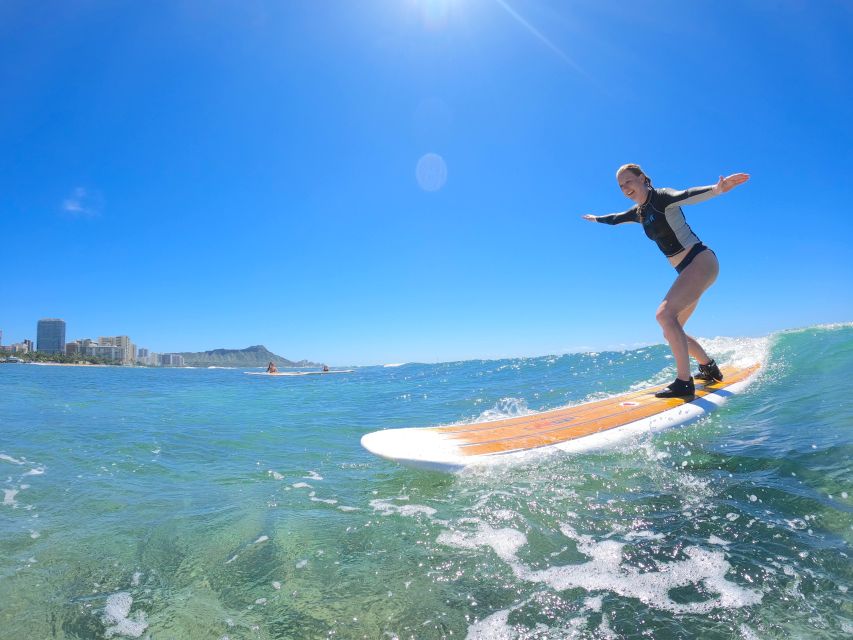
The biggest difference between a good surf lesson and a mediocre one is attention. This one leans into that. The overview lists a 3:1 student-to-tutor ratio, while the detailed expectations describe a 2:1 ratio for the water coaching.
Either way, the intention is the same: you’re not stuck in a crowd. You get individualized guidance while you’re paddling, positioning, and trying to stand. That directly affects how fast you improve.
Why it matters:
- Beginners struggle with timing. A coach can correct body position before it becomes bad habits.
- You’ll wipe out. A coach helps you reset quickly rather than lose the session.
- Comfort builds confidence. When you feel guided, you take the next attempt with less fear.
The “patient instructor” theme shows up again and again in the feedback. That patience isn’t just a personality trait. It’s practical. When you’re trying to coordinate pop-up timing while riding a wave, encouragement and clear explanations can make a huge difference in whether you keep trying.
Try your hand at something island-made
- Open Group Surfing Lesson in Waikiki, Hawaii
★ 4.5 · 582 reviews - Oahu: Beginner-Friendly Waikiki Beach Surfing Lesson
★ 4.9 · 425 reviews - Surfing Lessons On Waikiki Beach
★ 4.5 · 317 reviews - Waikiki Private Group Surf Lesson
★ 5.0 · 298 reviews - Surf Lessons on the North Shore of Oahu
★ 5.0 · 267 reviews
Ocean safety and lifeguard-certified instruction (the unglamorous part that helps you enjoy it)
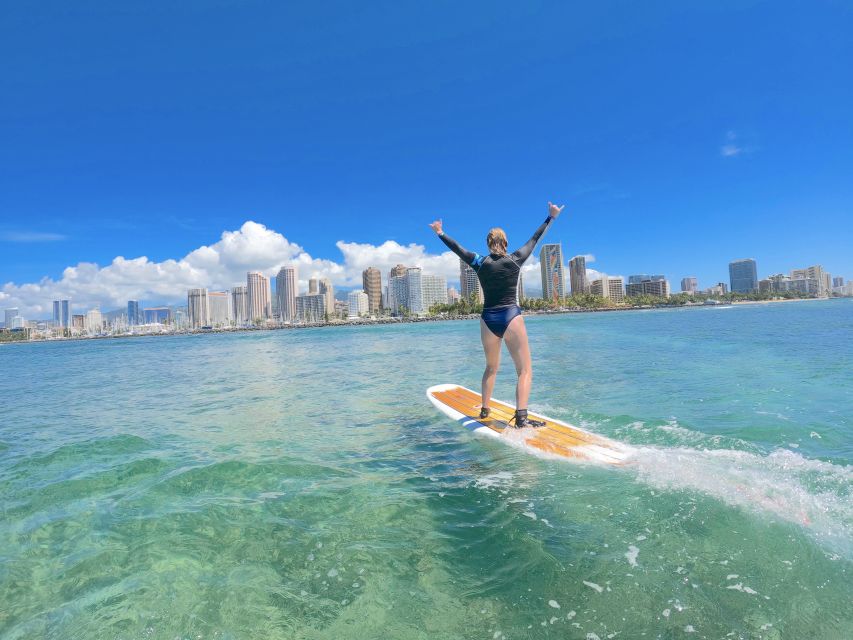
Surfing looks carefree. The ocean does not care about your Instagram plan. That’s why it’s a big deal that every instructor is a certified lifeguard.
Instructors are handling two jobs at once:
- Teaching you surfing mechanics
- Keeping the session safe and organized in real ocean conditions
The lesson includes general ocean safety and directions on proper technique. That means you’re not just jumping on a board and guessing where to go. You’ll understand how to stand, what to watch for, and how to behave around the water.
This is especially important for first-timers, because the hardest part often isn’t the pop-up. It’s reading the water and not doing something risky when you lose balance.
If you’re the kind of person who gets anxious in open water, you’ll likely appreciate that safety-first approach and the calm explanations.
What happens during the waves: technique plus real attempts
A lot of surf lessons promise technique. Few deliver enough actual wave attempts for you to connect technique to motion. Here, the lesson is explicitly a combination of surf technique and enough time to experience the waves.
That combination is the key for beginners. Here’s how it usually plays out in a well-run lesson:
- You’re coached on body position and the pop-up sequence.
- You paddle and try with the coach’s guidance in real time.
- You refine as you get more comfortable.
- You keep going long enough to get repeat practice rather than one or two tries and done.
The time-in-water amount is what makes that possible. Over 70 minutes means you’ll have enough chances to feel the rhythm. You’ll likely progress from tentative attempts to more confident pop-ups.
Also, instructors are described as fun-loving and encouraging. That helps when you’re learning something hard and slightly embarrassing. (Surf wipeouts are funny after the fact. While it’s happening, you just want it to stop taking your confidence.)
Photos and videos: plan for optional extra costs
If you love documenting experiences, you should know this: pictures and video downloads are not included.
In the feedback, there’s a specific note about an added photo cost—someone mentioned an extra charge of $45 per person for photos. Another feedback comment notes photos and videos are taken in the water and then you can purchase them at the end.
So here’s your practical advice: if you care about photos, set aside budget before you arrive. If you don’t, you can treat this like a lesson-first day and keep the spending under control.
Who this surf lesson is best for (and who should look elsewhere)
This experience is aimed at couples and small groups. It’s described as ideal for husband and wife, brothers and sisters, or two friends who want a shared activity that feels thrilling but still structured.
It’s not suitable for:
- Children under 12
- Pregnant women
- Wheelchair users
If you fit the age and mobility requirements, you’ll likely enjoy it most if you’re:
- Trying surfing for the first time
- Wanting lots of water time rather than a short taste
- Prefer a coach who explains clearly and stays patient when you don’t nail it immediately
If you’ve surfed a bit before, you might still find value in the safety coaching and the structured approach. But the lesson is clearly framed as a beginner-to-first-ride experience.
Meeting point and gear-ready logistics along the ocean
The meeting point is wherever the activity shows on Google Maps. Parking by the ocean is free, which is a nice convenience on Oahu.
Because you’re in the water for a long session, logistics matter. You want a place you can park easily, show up in swimwear-ready mode, and then get changed after.
The included gear means you don’t need to arrive with a surfboard plan. Still, you’ll want to bring the basics listed for what to bring: towel, sunscreen, water, cash, and a change of clothes.
Also note the instructor languages: English and Japanese. If you speak either, you should have an easier time communicating questions and getting corrections.
Price and value: $162 per person for real coaching time
At $162 per person for a 2-hour lesson, you’re paying for two things: instruction and surf access. The best value question isn’t just the sticker price—it’s how much active teaching and wave time you get.
Here’s why the price can make sense:
- You get over 70 minutes in the water, which is the hardest part to control in a lesson format.
- You’re coached at a tight ratio (listed as 3:1, with 2:1 described for water coaching).
- Gear is included—surfboard, leash, reef shoes, and a Hurley rash guard.
- Instructors are lifeguard certified, which adds real operational value.
The potential value “drag” is optional extras. Photos and video downloads cost extra. And you may choose to rent or use a wetsuit if recommended (though wetsuits are described as optional within the lesson setup).
My bottom line: if you want the most time riding waves and the least time messing around, this format justifies the cost. If you only want a quick taste and you’d rather keep photos spending low, you should still consider it, but treat the optional photo purchase as a separate decision.
Should you book this Oahu surf lesson for two?
Book it if you want a structured first surf experience with long water time, patient coaching, and gear handled for you. The repeated themes in the feedback—friendliness, clear explanations, smooth timing, and instructors like Noah being supportive—fit exactly what you need when you’re learning to stand up while the ocean is doing its own thing.
Skip it (or look for a different format) if you’re under 12, pregnant, or need wheelchair access. Also, if you’re strongly price-sensitive and hate optional add-ons, be aware that photos/videos are extra.
If you’re a couple and you want one shared day that feels more like doing than watching, this is a very solid choice.
FAQ
How long is the Oahu surfing lesson for two people?
The lesson duration is 2 hours.
How much time do we spend in the water?
After a 20–30 minute dry land instruction, you get over 70 minutes in the water.
Is the surf lesson beginner-friendly?
Yes. The lesson includes dry land basics on surfing and how to stand on the surfboard, plus ongoing instruction once you’re in the water.
What equipment is included in the lesson price?
The surfboard, leash, HURLEY rash guard, reef shoes, and the instructor are included. Wetsuits are optional.
What should I bring with me?
Bring swimwear, a change of clothes, a towel, sunscreen, water, and cash.
Are beach towels included?
Beach towels are not listed as included.
Do they offer photos or video?
Photos and video downloads are not included. You may have the option to purchase them, and photos/video are mentioned as being taken in the water.
What languages do the instructors speak?
Instructors speak English and Japanese.
Make Something Island-Made





More Tour Reviews in Oahu





Learn to Surf at Waikiki
Just Reviewed: More Oahu Tours





Waikiki Surf Lessons, compared.
 ★ 4.5Open Group Surfing Lesson in Waikiki, HawaiiFrom $112582 reviews
 ★ 4.9Beginner-Friendly Waikiki Beach Surfing LessonFrom $125425 reviews
 ★ 4.5Surfing Lessons On Waikiki BeachFrom $129317 reviews
 ★ 5.0Waikiki Private Group Surf LessonFrom $123298 reviews
 ★ 5.0Surf Lessons on the North Shore of OahuFrom $95267 reviews
 ★ 5.0Family, Private & Group Surfing Lessons, Waikiki Courtesy ShuttleFrom $107216 reviews
 ★ 4.9Waikiki 2-Hour Beginner Group Surf LessonFrom $103191 reviews
 ★ 5.0Private Surfing Lessons in WaikikiFrom $96176 reviews
Where else this tour ranks