
Reviewed · NORTH SHORE & HALEIWA
North Shore Beginner Surf Lesson, Hawaii
Learning surf rules is oddly fun.
This North Shore Oahu lesson turns a wild beach activity into a clear, confidence-building skill set, with a land intro, ocean etiquette, and real practice moving from paddling to standing. Small-group coaching and a beginner-friendly plan make it feel less like chaos and more like progress.
I especially like how you get all the surf gear (board and needed equipment), so you can show up and focus on the lesson. I also like that the instruction is detailed enough that you’re not just watching—you’re doing, getting feedback, and learning what to look for as you catch waves.
One thing to consider: there’s no transportation provided, so you’ll need to drive yourself from the meeting spot to the surf area. Also, you must be able to swim, and people with certain injuries should think twice.
In This Review
- Quick Take: Key Things I’d Bank On
- Surfing on Oahu’s North Shore: why this lesson works for first-timers
- Price, time, and group size: what you’re really paying for
- Meeting spot to surf spot: drive yourself to the action
- Waialua Bay intro: rules, falling safely, and ocean etiquette
- From laying to standing: the moves that turn fear into first rides
- Haleiwa practice time: using a coach to read waves
- The equipment and what to wear: simple choices that prevent misery
- Safety rules you should take seriously (and why the coaching feels good)
- Weather reality: the ocean decides
- Who should book this lesson (and who might choose differently)
- Should you book Surf N Sea’s North Shore beginner lesson?
- FAQ
- Do I need to know how to swim?
- Is transportation provided to the surf spot?
- What’s included in the lesson?
- How long is the surf lesson?
- What ages can join the group lesson?
- How big is the group?
- What happens if weather is poor?
Quick Take: Key Things I’d Bank On
- Max 4 travelers for more hands-on attention (not a big crowded class)
- Waialua Bay + Haleiwa setup gives beginners a realistic North Shore experience
- Land training first covers falling safely and ocean etiquette before you paddle out
- Instructors like Henry, Travis, Eric, Tanner, and Mark are repeatedly praised for patience and encouragement
- Provided board and equipment means you’re not hunting rentals or guessing what to bring
Surfing on Oahu’s North Shore: why this lesson works for first-timers
The North Shore has a reputation that makes surfing sound like a movie stunt. That can be intimidating. The smart move is to learn the basics from people who know how beginners fail—and then coach you around that.
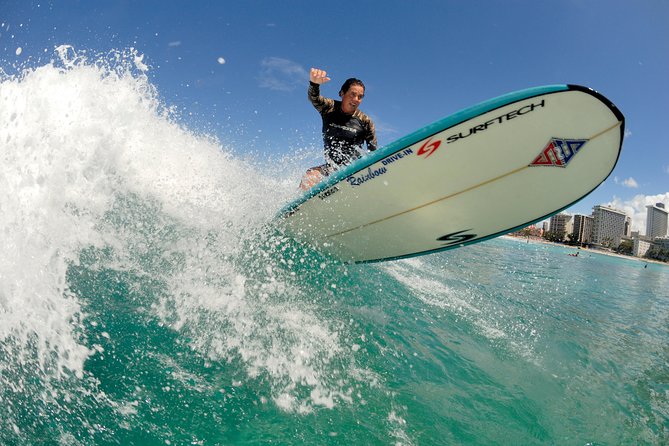
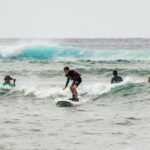
This lesson is built like a mini skill course. You start on land, so you understand what’s happening before the ocean changes everything. Then you head into the water to practice the exact motions that matter: paddling, positioning, standing up, and timing your wave takeoff.
And yes, you’re in surfing country. Waialua Bay and nearby Haleiwa give you the classic North Shore vibe—wide shoreline, big ocean energy, and that feeling that you’re learning in the right place.
More of the North Shore, from Haleiwa out to Waimea
- Oahu’s North Shore: 8-Line Zipline Adventure★ 5.0 · 3,616 reviews
- Toa Luau at Waimea Valley, Oahu★ 5.0 · 3,350 reviews
- Oahu North Shore Experience: Activities, Waterfall & Free Time★ 5.0 · 1,799 reviews
- Oahu: Shark Cage Dive on the North Shore★ 4.8 · 1,485 reviews
Price, time, and group size: what you’re really paying for
At $104 per person for about 2 hours, you’re paying for three things:
1) instruction time from experienced surf coaches
2) a beginner-friendly progression (not just letting you play in the water)
3) equipment included so you don’t have extra rental costs or gear decisions
When you break it down like that, the price starts to make sense—especially because this is a maximum of 4 travelers. Small group means fewer people fighting for attention, and more direct help when you’re learning how to paddle out and when you’re trying to stand.
Also, the lesson structure aims for efficiency. You get introduced to etiquette and safety, then you practice. That’s how you reduce wasted time and help first-timers start getting results faster.
Meeting spot to surf spot: drive yourself to the action
Here’s the logistics part that matters: no transportation is provided.
You meet at 62-595 Kamehameha Hwy, Haleiwa, HI 96712, and the session ends back at that spot. From there, you drive to the surf spot location (the instruction is that you’ll drive from Surf N Sea to the water).
If you’re renting a car, this is straightforward. If you’re relying on rideshare, plan extra buffer time. One participant noted getting turned around but was guided to the right place, so the staff will help if you’re lost—but it’s still better to arrive early and calm.
Waialua Bay intro: rules, falling safely, and ocean etiquette
Your lesson begins with a land intro that’s more than a speech. It’s the foundation you need so you don’t feel lost out there.
You’ll go over:
- ocean etiquette (how to act around other surfers and avoid dangerous situations)
- falling safely (so you know how to handle wipeouts instead of panicking)
- the basics of going from laying to standing
- how to catch waves as a beginner
- what kind of board you should use when you’re starting out
This is one of the most valuable parts of the whole experience. Surfing isn’t only physical—it’s reading space and flow. When you understand the rules and the mechanics first, the water time becomes productive instead of stressful.
And because safety is emphasized (including for young kids), the approach feels organized even though you’re out in a real ocean.
Catch the gentle Waikiki rollers, more lessons
- Open Group Surfing Lesson in Waikiki, Hawaii
★ 4.5 · 582 reviews - Oahu: Beginner-Friendly Waikiki Beach Surfing Lesson
★ 4.9 · 425 reviews - Surfing Lessons On Waikiki Beach
★ 4.5 · 317 reviews - Waikiki Private Group Surf Lesson
★ 5.0 · 298 reviews - Family, Private & Group Surfing Lessons, Waikiki Courtesy Shuttle
★ 5.0 · 216 reviews
From laying to standing: the moves that turn fear into first rides
Most first-time surfers don’t struggle because they’re not brave. They struggle because the sequence is confusing. When should you look up? When should you push? How do you shift your weight fast enough to stand?
That’s exactly what the coaching targets. The goal is to practice the easiest path from board position to standing so it starts to feel natural.
You’ll learn:
- how to paddle effectively and get into position
- how to transition from prone/laying positions to standing
- how to time your movement for catching waves
- what beginner surf spots tend to be like (so you know what to expect)
A common thread in participant feedback is that coaches help you paddle out and spot waves that you have a chance at. That matters a lot. If you’re trying to choose your own waves as a brand-new surfer, you’ll miss opportunities (and waste energy). Good instruction turns chance into a pattern you can repeat.
Haleiwa practice time: using a coach to read waves
After the initial intro, the lesson continues with practice that feels like real surfing training—not just a “try it” session.
In Haleiwa-area sessions, what you’re really learning is how to adapt. Conditions can change fast. Even when the waves are beginner-friendly, there’s still timing, spacing, and effort.
That’s where a coach earns their spot. In multiple accounts, instructors were described as supportive and active in the water—helping beginners get positioned, making sure you’re safe, and guiding you toward waves you can ride.
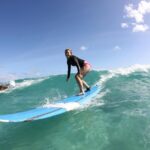
If you land a first wave, it doesn’t just feel good. It builds momentum. More than one person said they were able to stand up and ride, sometimes more than once, which is exactly what you want from a beginner lesson.
One participant also mentioned a whale sighting during their session. Obviously, wildlife sightings aren’t guaranteed, but it’s a reminder: you’re surfing in a place with real nature drama.
The equipment and what to wear: simple choices that prevent misery
This is one of the easiest “what do I bring?” setups you’ll find in Hawaii. Surf board and all needed equipment are included. That’s a huge value. You don’t need to figure out board sizes, rental options, or whether you’re showing up underprepared.
What about your body and clothes?
- You must be able to swim. No exceptions.
- One participant recommended wearing a wet shirt because the surfboards are foam. That’s practical advice. Foam + saltwater can mean contact that feels a little grabby or cold, so plan for comfort.
What I’d do: wear swimwear or quick-dry gear, bring sunscreen, and expect to get wet. Also pack a small towel and something dry for after.
Safety rules you should take seriously (and why the coaching feels good)
Surfing has risks, even for beginners. This lesson makes a point of safety and etiquette, especially for kids.
Important notes you should know before booking:
- You must be able to swim.
- The lesson isn’t recommended if you have back or knee problems.
- If you’ve had recent surgeries, you should skip this activity.
- Travelers should have moderate physical fitness level.
There’s also a child policy: group surf lessons are for children 13 and above. Kids under 13 require a private lesson. That’s a big deal because it shows the program is thinking about supervision needs instead of throwing little kids into group logistics.
If you go in with realistic expectations—warm up, listen, don’t fight the ocean—you’ll likely come away feeling proud instead of wrecked.
Weather reality: the ocean decides
This experience requires good weather. If it gets canceled due to poor weather, you’ll be offered a different date or a full refund.
Even when the weather is decent, surf conditions can affect how easy it is to catch waves. One participant said conditions weren’t ideal but still enjoyed the experience. Translation: some days feel smoother than others, and a good coach helps you make the best of what you get.
That’s also why a beginner lesson is smart. You’re not trying to conquer the most intense lineup. You’re learning the mechanics and habits that work across conditions.
Who should book this lesson (and who might choose differently)
This is a great fit if:
- you’ve never surfed before (or you’ve only tried once)
- you want hands-on coaching with lots of feedback
- you prefer a small group over a big class
- you want a clear introduction to surfing culture: etiquette, safety, and technique
It may not be the best choice if:
- you can’t swim confidently
- you have knee/back issues or you’re recovering from surgery
- you want transportation included (you’re driving)
For families, it’s appealing because the North Shore is so iconic, and the lesson is designed to help you get results without needing special gear. One family described the North Shore as amazing and praised the patience and knowledge of the instructor—exactly what you want for teenagers too, when the learning curve can be emotional.
For solo travelers, it’s also a solid option. Small group plus active coaching means you’re not just tossed into the sea alone.
Should you book Surf N Sea’s North Shore beginner lesson?
I think you should book this if your goal is simple: learn the real basics with equipment included, a coach in your corner, and a plan that prioritizes safety and technique. The small group size is a real advantage, and the instruction style—patient, encouraging, and focused on getting you onto the board—shows up again and again.
Skip it if you can’t swim, have relevant injuries, or you don’t want to handle the drive yourself.
If you want a confident first surf day on Oahu, this is one of the more practical ways to do it.
FAQ
Do I need to know how to swim?
Yes. You must be able to swim for this activity.
Is transportation provided to the surf spot?
No. No transportation is provided, and you’ll need to drive from the meeting point to the surf spot location.
What’s included in the lesson?
The lesson includes a surf board and all the equipment you would need.
How long is the surf lesson?
It’s about 2 hours.
What ages can join the group lesson?
Group surf lessons are for children 13 years old and above. Children under 13 require a private lesson.
How big is the group?
This activity has a maximum of 4 travelers.
What happens if weather is poor?
This experience requires good weather. If it’s canceled due to poor weather, you’ll be offered a different date or a full refund.
More Tour Reviews in Oahu



Learn to Surf at Waikiki


Up on the North Shore




Just Reviewed: More Oahu Tours


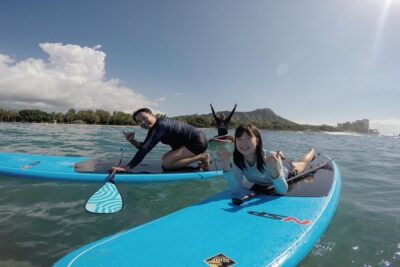

North Shore & Haleiwa, compared.
 ★ 5.0Oahu Circle Island Tour with Waimea WaterfallFrom $1543,912 reviews
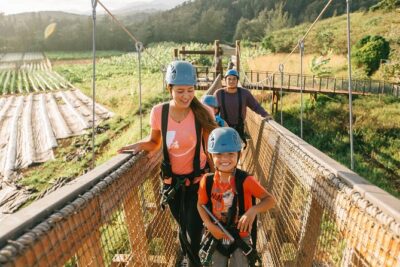 ★ 5.0Oahu’s North Shore: 8-Line Zipline AdventureFrom $2033,616 reviews
 ★ 5.0Toa Luau at Waimea Valley, OahuFrom $1333,350 reviews
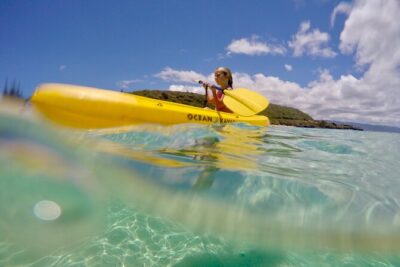 ★ 5.0Oahu North Shore Experience: Activities, Waterfall & Free TimeFrom $1671,799 reviews
 ★ 4.8Shark Cage Dive on the North ShoreFrom $991,485 reviews
 ★ 5.0Shark Cage Diving on Oahu’s North ShoreFrom $1001,391 reviews
 ★ 5.0Full Day Oahu Circle Island -Turtle Beach Snorkel at North ShoreFrom $110662 reviews
 ★ 5.0Safe and Educational Shark Dive from Haleiwa: Sharks GuaranteedFrom $165553 reviews
Where else this tour ranks