

Reviewed · WAIKIKI SURF LESSONS
Group Surf Lesson: Two Hours Of Beginners Instruction
Two hours can change how you stand. This small-group Waikiki surf lesson turns first-timers into wave-riders fast with CPR and lifeguard certified instruction, though a full class can mean more hands-on pushing. I like the land-to-water plan and the relaxed, patient coaching style I’ve heard across different instructors.
I also appreciate the structure: you start on land to build the mechanics, then you hit the water with guidance for paddling, positioning, and safety. A possible drawback: if you’re hoping to catch waves entirely by yourself right away, the early stage may feel a bit assisted at first.
You choose a morning or afternoon lesson to fit your Oahu days, and the experience meets at Kaimana Beach Hotel and ends back there. It’s set up for beginners (and returning beginners who still feel wobbly), with souvenir photos available for purchase separately.
In This Review
- Key Highlights You’ll Feel in the Water
- Why This 2-Hour Waikiki Surf Lesson Fits Beginners
- Check-In at Kaimana Beach Hotel and the Start-to-Finish Rhythm
- Land Lesson First: Positioning, Paddling, Turns, and Safety Rules
- In the Water: How You Catch Waves, Stand Up, and Keep Going
- What the Small Group Size Changes for Your Experience
- The Waikiki Spot: Secluded Feel, Real Ocean Moments
- What’s Included, What’s Not, and How to Plan for Photos
- Who Should Book This Lesson (and Who Might Want Another Option)
- Should You Book This 2-Hour Beginners Surf Lesson in Oahu?
- FAQ
- How long is the group surf lesson?
- Where does the lesson start and end?
- What age is required to join?
- How many people are in the group?
- Is the lesson offered in English?
- Are instructors certified in CPR and lifeguarding?
- What topics are covered during the lesson?
- Are souvenir photos included?
Key Highlights You’ll Feel in the Water
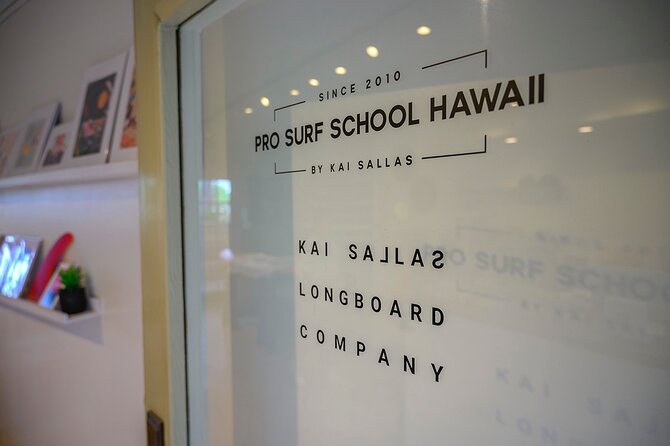
- Up to 6 surfers keeps the lesson supportive and not chaotic
- Land drills first cover positioning, paddling, turns, stance, balance, and safety rules
- CPR and lifeguard certified instructors (American Red Cross) for peace of mind
- Catch real waves sooner with coaching aimed at getting to your feet
- Morning or afternoon options make Waikiki days easier to plan
Why This 2-Hour Waikiki Surf Lesson Fits Beginners

If surfing is on your Hawaii list, a 2-hour format is smart. You get enough time to learn basics, try them, and still leave with energy left for Waikiki afterward. It’s long enough to make progress and short enough that the ocean and your arms don’t totally win.
What makes this lesson especially workable is the approach: you don’t just get thrown into waves and hoped for the best. The session starts with a quick introduction on land, then moves to the water where instructors coach you through catching waves, standing up, and staying safe.
I also like that the lesson is designed for different beginner levels. It’s aimed at true first-timers, but it also helps people who have tried once or twice and still don’t feel stable. That matters, because the problem in surf lessons is rarely motivation. It’s usually foot placement, paddling rhythm, and knowing what to do when the wave is coming.
The secluded Waikiki setting helps too. You’re in the most famous surf neighborhood on Oahu, but the teaching happens without the feel of a huge crowd scene. That creates a calmer learning environment, especially if you’re bringing kids or you’re nervous about getting knocked down.
Catch the gentle Waikiki rollers, more lessons
- Open Group Surfing Lesson in Waikiki, Hawaii★ 4.5 · 582 reviews
- Oahu: Beginner-Friendly Waikiki Beach Surfing Lesson★ 4.9 · 425 reviews
- Surfing Lessons On Waikiki Beach★ 4.5 · 317 reviews
- Waikiki Private Group Surf Lesson★ 5.0 · 298 reviews
Check-In at Kaimana Beach Hotel and the Start-to-Finish Rhythm
You meet at Kaimana Beach Hotel, and the lesson ends back at the same meeting point. That simple loop matters because Waikiki can be a logistics puzzle: parking, timing, and where you need to be can eat your day. Starting and finishing at one clear spot reduces stress and keeps you focused on the actual surf lesson.
The experience is provided in English, and you’ll receive confirmation at booking. You also get a mobile ticket, which is handy if you prefer minimal paperwork while traveling. The activity is listed as near public transportation, so if you don’t want to fight parking, you have options.
One small planning note from what people have shared: parking near the hotel area can be tricky. Some people used valet right by the shop (and found it workable), while others recommended being ready with coins for meters in the neighborhood. Even if you’re not parking right next to the surf spot, it’s good to come with a Plan B.
You’ll also be working within a small group. The maximum group size is 6 travelers, which is exactly the kind of number where an instructor can still notice what your body is doing. That’s the difference between learning surfing and just spending time in the ocean.
Finally, ages matter here: you must be 11 years or older. If you’re traveling as a family, this lesson is a strong fit for kids who can follow directions and commit to safety rules, even if they’re still figuring out balance on land.
Land Lesson First: Positioning, Paddling, Turns, and Safety Rules
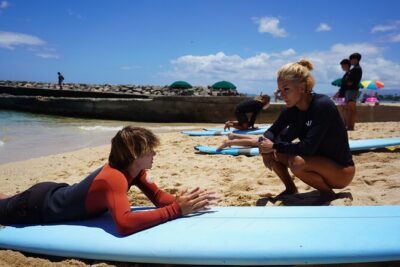
The land portion is brief, but it’s not random. It’s built to get you thinking like a surfer before you’re tired and wet. This is where you learn the key topics that make the ocean feel less chaotic: positioning yourself on the board, paddling techniques, how to maneuver over waves, turning the board, how to get to your feet, surf stance, balance techniques, and safety rules.
Here’s why this matters: most beginners fail for predictable reasons. They paddle with the wrong rhythm, they look down instead of scanning for what’s happening, and they try to stand at the wrong moment. Land drills help you rehearse timing and posture so you can copy it quickly in the water.
You’ll also get introduced to the physical basics of surfing stance and balance. The goal isn’t to make you perfect on day one. It’s to give you reference points you can use when your board starts moving and your body wants to panic.
And safety rules are part of the foundation, not the afterthought. When you understand what’s expected around other surfers, wipeouts feel less frightening. Instructors are CPR and Lifeguard certified through the American Red Cross, which adds weight to the whole safety-first vibe.
A good land lesson also saves time in the ocean. Instead of spending your first session guessing, you’re working off cues you already heard on shore. That tends to increase the odds that you catch a few waves and actually get a chance to stand, which is the main point for most people.
In the Water: How You Catch Waves, Stand Up, and Keep Going
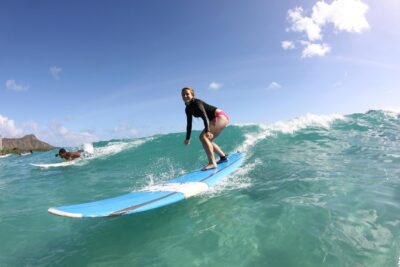
Once you’re in the water, the instructors guide you step-by-step through what matters most: catching waves, getting to your feet, and staying safe while you learn. The aim is fun first, skill-building second, but in the surf world those two are connected. When you understand the wave and the board, you stop fighting the experience.
You should expect coaching focused on these essentials:
- Position and paddling so you’re in the right spot when a wave starts to form
- Reading the wave moment so you can prepare instead of react late
- Turning and maneuvering so the board responds the way you think it should
- Getting to your feet with the right sequence and stance
- Balance and stability as the board moves under you
For first-timers, the biggest win is usually this: the instructor helps you get into successful attempts. People have described instructors giving a push when needed, then letting you try without it once you start timing things better. That’s a real learning pattern. You’re not expected to invent surfing from zero. You’re building it with feedback.
If you’re bringing a family, this portion is often where nerves turn into confidence. Kids and adults can get overwhelmed by waves on their first try, and the calmer instruction style makes a difference. More than once, people have highlighted instructors who stayed patient and supportive while coaching kids through the first takeoff and the first wipeout.
One consideration to keep in mind: a full group can affect how much one-on-one you feel. The lesson is capped at 6, but even with that cap, instructors may prioritize keeping the group moving and covering safety basics. If you want maximum independence and minimal assistance from the very first set, you may feel the early experience is more guided than you expected.
Try your hand at something island-made
- Open Group Surfing Lesson in Waikiki, Hawaii
★ 4.5 · 582 reviews - Oahu: Beginner-Friendly Waikiki Beach Surfing Lesson
★ 4.9 · 425 reviews - Surfing Lessons On Waikiki Beach
★ 4.5 · 317 reviews - Waikiki Private Group Surf Lesson
★ 5.0 · 298 reviews - Surf Lessons on the North Shore of Oahu
★ 5.0 · 267 reviews
What the Small Group Size Changes for Your Experience
A group of up to 6 sounds small, but in practice it’s huge. It changes the lesson from a general talk into a personal coaching session. You’re more likely to get the exact correction you need, not just general reminders.
It also helps with safety. When you’re learning surf fundamentals, you’re learning where to paddle, where to sit or position, and what to do when a wave hits. That’s information you want delivered while your body is actually learning, not after you’ve already practiced the wrong way for an hour.
In the feedback I’ve seen tied to this lesson style, the most praised aspect is the instruction itself: patient, relaxed coaching that still stays professional. Multiple instructors have been named by people who took the lesson, including Noah, Janelle, Max, Jake, Josh, Sean, and Kai. The common thread isn’t just that they were friendly. It’s that they helped people get up quickly, even when that felt unlikely at the start.
Another plus of the small group: you may get more of your own waves rather than constantly waiting your turn. One of the practical joys of a well-paced group lesson is that you’re not standing around in frustration. When instructors keep the flow going, you rack up enough attempts to learn.
Still, here’s the honest trade-off. If your goal is purely technical mastery and you want every wave to be a solo problem to solve, a beginner group lesson may feel a little assisted. It’s designed to teach you safely and efficiently, not to let you struggle alone for the sake of it.
The Waikiki Spot: Secluded Feel, Real Ocean Moments
This lesson takes place at a secluded Waikiki spot, which is a big reason people enjoy it. Waikiki is famous, but that doesn’t mean it has to feel crowded during your lesson. A quieter stretch of ocean helps beginners focus on paddling and timing instead of scanning for other boards all the time.
And yes, you’re still in Waikiki territory. That means you’re in the same general area that makes surf part of the everyday Hawaii vibe. You’re not trekking to a remote surf destination where logistics pile up. You’re in a place where the day around the lesson is easy to stitch into your sightseeing plans.
The ocean part is the payoff. Once you’re past the first wipeout (which is normal), surfing becomes a physical conversation with the wave. You learn what it feels like when positioning clicks and when you time the stand so your board actually carries you.
Also, being in the ocean with certified instructors makes it more comfortable to relax. You can focus on the learning cues rather than worry about basic safety. That confidence tends to improve performance, because you’re less tense and more willing to try again right after a fall.
What’s Included, What’s Not, and How to Plan for Photos
The lesson includes all taxes, fees, and handling charges, and local taxes. That means you should not be surprised by add-on taxes at the end. It’s a simple package.
Souvenir photos are not included, but they are available for purchase. If you care about having a memory of your first wave, decide on your priorities before you go in. Some people like picking photos afterward once they’ve seen the results; others prefer to know they’ll be spending a bit extra if they catch the shot they want.
If you’re traveling with kids or you’re the one who normally doesn’t get photos, consider budgeting for the possibility of purchasing images. The surfing moment is brief, and you’ll likely want proof that you actually did it.
Who Should Book This Lesson (and Who Might Want Another Option)
Book this if you want:
- A first surfing experience with structure and safety baked in
- A small group setting where you can actually learn, not just watch
- A lesson that works for both kids and adults (with the 11+ requirement)
- A guided path from land mechanics to ocean standing and balance
This is also a smart choice if you’ve tried surfing before and got stuck on the basics. If you already know the idea but still struggle with getting to your feet, this lesson’s focus on positioning, paddling, turning, stance, balance, and safety rules is exactly what you need.
Consider another approach if:
- You’re expecting the lesson to be almost completely independent from the start
- Your main goal is advanced surfing technique rather than first-wave fundamentals
- You’re very sensitive to feeling that you were pushed or assisted early on
That said, the overall pattern from named instructors and the high recommendation rate points to real progress for most beginners. Even when the ocean doesn’t cooperate, you’ll leave with a clearer surf plan than when you arrived.
Should You Book This 2-Hour Beginners Surf Lesson in Oahu?
If your goal is to learn surfing in Waikiki without turning it into a stressful project, I’d say yes. The combination of land fundamentals, in-water coaching, and CPR/lifeguard certified safety creates a learning environment that’s both practical and confidence-building. The time window is also well-sized for beginners who want real attempts, not a long ordeal.
I’d book it especially if you value patient instruction and you want help getting to your feet. And if your only concern is that you might want more solo wave-catching time, know that early surf learning is often assisted at first so you can build technique safely. For most people, that’s a feature, not a flaw.
FAQ
How long is the group surf lesson?
It’s about 2 hours.
Where does the lesson start and end?
You meet at Kaimana Beach Hotel, 2863 Kalākaua Ave, Honolulu, HI 96815, and the activity ends back at the meeting point.
What age is required to join?
You must be 11 years or older.
How many people are in the group?
The maximum group size is 6 travelers.
Is the lesson offered in English?
Yes, it’s offered in English.
Are instructors certified in CPR and lifeguarding?
Yes. All instructors are CPR and Lifeguard certified by the American Red Cross.
What topics are covered during the lesson?
You’ll cover positioning, paddling techniques, maneuvering over waves, turning the surfboard, getting to your feet, proper surf stance, balance techniques, and safety rules.
Are souvenir photos included?
No, souvenir photos are available to purchase but not included.
Make Something Island-Made




More Tour Reviews in Oahu





Learn to Surf at Waikiki
Just Reviewed: More Oahu Tours





Waikiki Surf Lessons, compared.
 ★ 4.5Open Group Surfing Lesson in Waikiki, HawaiiFrom $112582 reviews
 ★ 4.9Beginner-Friendly Waikiki Beach Surfing LessonFrom $125425 reviews
 ★ 4.5Surfing Lessons On Waikiki BeachFrom $129317 reviews
 ★ 5.0Waikiki Private Group Surf LessonFrom $123298 reviews
 ★ 5.0Surf Lessons on the North Shore of OahuFrom $95267 reviews
 ★ 5.0Family, Private & Group Surfing Lessons, Waikiki Courtesy ShuttleFrom $107216 reviews
 ★ 4.9Waikiki 2-Hour Beginner Group Surf LessonFrom $103191 reviews
 ★ 5.0Private Surfing Lessons in WaikikiFrom $96176 reviews
Where else this tour ranks