
Reviewed · TOURS
Oahu Off the Beaten Path Small-Group Tour from Honolulu
One van ride, and Oahu tells its real story. This half-day tour takes you off the usual beach track and threads together local heritage, geology, and spiritual sites across windward and south Oahu. You’ll get a focused pace in an air-conditioned vehicle, with time at each stop that feels more human than rushed.
What I like most is the small group size (up to 20), which makes it easier for your guide to answer questions and adjust when the day calls for it. I also love the mix of sacred places and everyday public spaces, from temple grounds to state monuments, all explained with care by guides such as Ama and Simina—both praised for local attention and thoughtful storytelling.
One thing to consider: Byodo-in Temple admission isn’t included, so plan for an extra entry cost there (everything else on the list is marked free).
In This Review
- Key points to know before you go
- A half-day Oahu story tour that actually feels personal
- Meeting at Honolulu Zoo, then heading straight into the good stuff
- Makapu‘u Point: the bulging-eye lookout with a god behind the name
- Kaka‘ako Waterfront Park: Point Panic Park and a whale-shaped centerpiece
- Byodo-in Temple Hawaii: Japanese roots, Oahu setting, and a UN-level legacy
- Ulupo Heiau State Monument: legends, chiefs, and what sacred means
- Heʻeia State Park and Keʻalohi Point: fishpond time on Oahu’s windward side
- Kahi Hali‘a Aloha: loving remembrance and protected ancestral remains
- Small-group guide energy: why Ama and Simina get praised so often
- What’s included, what you’ll pay extra, and what to bring
- Is this the right Oahu tour for you?
- Should you book this Oahu off-the-beaten-path tour?
- FAQ
- How long is the Oahu Off the Beaten Path Small-Group Tour?
- Where is the tour meeting point?
- What time does the tour start?
- How many people are in the group?
- What’s included in the price?
- Is the tour offered in English?
- Do I need to pay admission fees during the tour?
- What should I wear?
- Is there a minimum age?
- FAQ
- Is free cancellation available?
Key points to know before you go
- Up to 20 people means you’re not just watching out a window; you’re actually in the conversation
- Makapu‘u, Kaka‘ako, Byodo-in, heiau, fishponds in one half-day keeps the story moving
- A guide you can ask questions to makes the cultural context feel practical, not vague
- Most stops are free, so your main add-on is temple admission at Byodo-in
- Air-conditioned transport plus bottled water helps on a warm Oahu morning
- Start and end at Honolulu Zoo makes it easy to fit into your day
A half-day Oahu story tour that actually feels personal
If you only do the beach circuit on Oahu, you’ll miss a lot of what makes the island feel alive. This tour is built to go beyond postcard views and into the places where people remember, worship, fish, travel, and build meaning from the land. The route is designed like a guided walk through ideas: lookout to neighborhood art, temple grounds, ancient sites, then windward history and remembrance.
You’ll travel in an air-conditioned vehicle, and that matters. Oahu mornings can still feel warm, and you’ll be outside at several stops. You’re also not left to fend for yourself; bottled water is included, and the driver/guide helps keep the timing smooth.
The small-group cap (maximum of 20) changes the whole feel. A larger bus turns stops into a quick photo sprint. Here, the guide can slow down, check in with the group, and even adjust where needed so people feel comfortable and included. That “small group” advantage shows up again and again in the way the guides are described—patient, attentive, and willing to make the day work for everyone.
Before you lock it in, here is what else is running around the island.
- Parasailing Experience in Waikiki, HI★ 5.0 · 7,692 reviews
- Waikiki Trolley Hop-On Hop-Off Tour of Honolulu★ 4.5 · 4,783 reviews
- Waikiki, Hawaii: Turtle Canyon Snorkel Excursion★ 5.0 · 4,656 reviews
- Paradise Cove Luau★ 4.5 · 4,498 reviews
Meeting at Honolulu Zoo, then heading straight into the good stuff
Logistics are refreshingly simple. The tour meets at the Honolulu Zoo at 151 Kapahulu Ave, and it starts at 9:00 am. It ends back at the same meeting point. For a 5 to 6 hour experience, that’s a big deal: you don’t waste your morning figuring out where to catch a ride or where to close out the day.
Dress code is smart casual. That’s your clue that you may be stepping into places where you should look respectful, not just sporty beach-ready. Bring sun protection like you would for any Oahu outdoor day, and keep your plans flexible around sacred spaces and monuments.
Price is $144 per person for a half-day tour. That’s not a “cheap and casual” option, but it’s also not trying to charge like a luxury private guide. The value shows up because several costs are bundled—driver/guide, a local guide, fuel surcharge, landing and facility fees, plus bottled water. The only clearly listed admission you should budget for is Byodo-in Temple Hawaii.
Makapu‘u Point: the bulging-eye lookout with a god behind the name
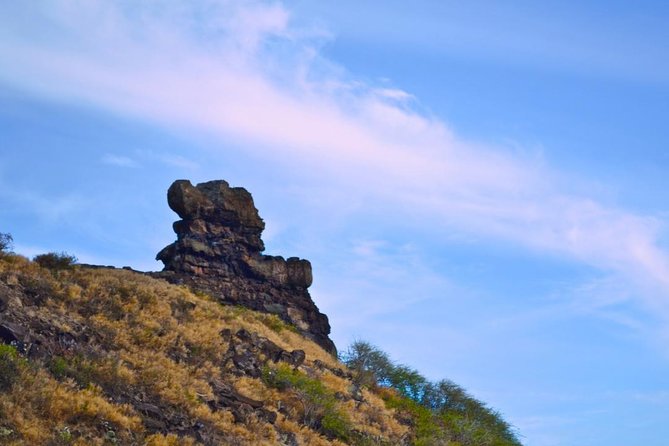
You start with Makapu‘u Point, one of the island’s most striking viewpoints. The name itself is part of the story: Makapu‘u means bulging eye in Hawaiian, and it’s tied to a Tahitian god said to have lived in a cave in the area with eight bright eyes.
This stop is short—about 15 minutes—but it’s the right kind of short. It’s enough time to take in the view, orient yourself, and hear the meaning behind the place. If you’re the kind of traveler who likes to understand what you’re seeing before you take the photo, this is a great opener.
One small practical note: a lookout is exposed. Even if the day is pleasant, keep an eye on wind and sun. Wear something that you don’t mind getting a little sun-kissed.
Kaka‘ako Waterfront Park: Point Panic Park and a whale-shaped centerpiece
Next you’ll head to Kaka‘ako Waterfront Park, also called Point Panic Park. This is in Kakaʻako, south of downtown Honolulu, and it’s known for a striking spiral feature called the Whales Chamber.
Stop time is about 20 minutes. This isn’t a long stop for big walking loops, and that’s fine. It works as a change of pace: from a famous lookout to a public waterfront space with a unique design element. It’s a good spot to notice how Oahu isn’t only about temples and heiau. Public art and community spaces have their own role in the island’s identity.
If you’re wondering what you’ll actually learn here, the answer is context: your guide connects places like this to the island’s broader layers of settlement, change, and modern-day culture.
- Waikiki Trolley Blue Line Coastline & Local Grindz Hop-on Hop-off
★ 5.0 · 4,159 reviews - Oahu Circle Island Tour with Waimea Waterfall
★ 5.0 · 3,912 reviews - Oahu’s North Shore: 8-Line Zipline Adventure
★ 5.0 · 3,616 reviews - Hidden Gems of Oahu Circle Island Tour with Byodo In Temple
★ 5.0 · 3,450 reviews - Toa Luau at Waimea Valley, Oahu
★ 5.0 · 3,350 reviews
Byodo-in Temple Hawaii: Japanese roots, Oahu setting, and a UN-level legacy
The third stop is one of the most visually memorable on the route: The Byodo-in Temple Hawaii in Valley of the Temples Memorial Park. It sits at the foot of the Ko‘olau Mountains, and it has a clear reason for existing. The temple was established on June 7, 1968, to mark the 100-year anniversary of the first Japanese immigrants to Hawaii.
Here’s the part that adds depth fast: the site is a smaller-scale replica of the Byodo-in Temple in Uji, Japan, which is tied to the United Nations World Heritage list. Even if you don’t follow every detail of temple architecture, you’ll feel the intention of the design—this is a place built to carry memory across oceans.
Stop time is about 25 minutes. Admission here is not included, so check your plans and have a little extra budget. Also, expect a quieter tone than at a lookout or waterfront park. This is a site where respect matters, and your guide will likely steer the group accordingly.
Ulupo Heiau State Monument: legends, chiefs, and what sacred means
Then the tour moves into deeper roots with Ulupo Heiau State Monument. This is an ancient site linked in legend with the menehune—small people from Hawaiian storytelling. Later, it’s also associated with high chiefs of Oʻahu, including Kakuhihewa in the 15th century and Kualiʻi in the late 17th century.
Your time here is around 15 minutes, and that’s part of the point. Heiau sites deserve space. You’re not there to sprint through. You’re there to understand that these places were (and still are) meaningful to the people of O‘ahu.
If you like mythology and local history but you hate when a tour turns sacred stories into trivia, this stop is a good match. The best guides keep it respectful and grounded—sharing what’s known and why it matters, without turning it into a theme-park show.
Heʻeia State Park and Keʻalohi Point: fishpond time on Oahu’s windward side
Next comes Heʻeia State Park, on Oahu’s windward side. This is where the tour shifts from look-and-learn to land-and-use. Heʻeia is also known as Keʻalohi Point, and your guide will talk about the significant changes across its storied history.
You’ll also see plant life tied to both indigenous and Polynesian-introduced species. That’s a useful detail because it shows how ecosystems aren’t frozen in time. People came with plants, practices, and needs, and the land adapted.
One major draw here: you’ll see the oldest fish pond on Oahu and learn about its significance. Fishponds are not just old infrastructure. They’re evidence of how people understood water, food systems, and the rhythms of place.
Stop time is about 20 minutes. That’s long enough to hear the meaning and spot what makes the fishpond important, without turning it into a long hike.
If you’re looking for a break from beach crowds and want to feel how Oahu looked and worked before modern development dominated the view, this is one of the strongest stops on the day.
Kahi Hali‘a Aloha: loving remembrance and protected ancestral remains
The final cultural stop is Kahi Hali‘a Aloha, a place of loving remembrance. This memorial was designed by lineal descendants to accommodate Hawaiian ancestral remains. It’s also described as the first of its kind to offer permanent and dignified protection for generations.
This stop is about 20 minutes, and it’s the kind of place where your guide’s tone matters. When the site is about memory and protection, the visit should feel grounded and quiet. This is not a “quick look” moment. It’s meant to land in your mind.
If you care about learning the difference between visiting a location and honoring what it represents, you’ll appreciate that the tour ends with a stop focused on dignity and care rather than just scenery.
Small-group guide energy: why Ama and Simina get praised so often
Two guide names come up in the experience descriptions: Ama and Simina. The common thread is not just information, it’s attitude.
Ama is praised as a native Hawaiian host with a wealth of local and historical information. That kind of background matters because it tends to show up in how the guide frames the story—not just what they say, but how they connect place to people.
Simina is repeatedly described as patient and thoughtful, with a careful, attentive approach. She’s also noted for being security conscious and for using a comfortable Mercedes van. That might sound like a throwaway detail, but it actually matters on a tour like this: if the guide keeps the group organized and calm, you’re free to actually listen.
One more practical perk of a small group: your guide can take your comfort seriously. You’re not forced to squeeze through stops the way you would on a larger schedule. The day can flex while still staying on track.
What’s included, what you’ll pay extra, and what to bring
Here’s the clear value picture.
Included:
- Bottled water
- Driver/guide
- Local guide
- Fuel surcharge
- Landing and facility fees
- Mobile ticket
- Offered in English
Not included:
- Admission ticket for Byodo-in Temple Hawaii
Most other stops are marked with free admission, so you’re not paying multiple entrances across the day. That keeps your budget under control.
What to bring:
- Smart casual clothing that still lets you stand comfortably and look respectful
- Sun protection, since you’ll have outdoor time at lookouts and parks
- A camera or phone for the viewpoints and waterfront design
If you’re sensitive to crowds, this tour’s size cap is a relief. If you’re the type who hates waiting in line or doing long transfers, the half-day format and start/end point near Honolulu Zoo help a lot.
Also, if you’re planning this as one piece of a bigger Oahu itinerary, the 9:00 am start gives you options for the rest of the day. You’re not wiped out into the evening, and you still get to see several distinct areas of the island.
Is this the right Oahu tour for you?
This tour fits best if you want Oahu to feel lived-in, not just viewed. It’s for travelers who like heritage, geography, and spiritual context. If you’re tired of only beach stops and you want a route that shows how the island’s meaning is built into lookouts, temples, heiau sites, and working landscapes, you’ll likely enjoy it.
It may not be ideal if you want a lot of time for long walks or if you need a strictly sightseeing-only day with zero sacred context. The itinerary is specifically designed to teach, and that means the tone is more reflective than party-tour.
Should you book this Oahu off-the-beaten-path tour?
If you’re choosing between another quick “views only” Oahu outing and something that connects places to stories, I’d lean toward this one. The price makes sense because so many costs are folded in, most stops are free, and you’re capped at 20 people. That combo usually leads to a better guide experience and less time wasted in transit.
Also, it’s a strong pick if you’re a first-timer trying to understand Oahu beyond Waikīkī. You’ll get the visual highlights, but you’ll also leave with names and meanings you can repeat: Makapu‘u’s bulging-eye story, Byodo-in’s Japanese-in-Hawaii connection, Ulupo’s legends and chiefs, and the importance of the fishpond and the remembrance memorial.
FAQ
How long is the Oahu Off the Beaten Path Small-Group Tour?
It runs about 5 to 6 hours.
Where is the tour meeting point?
You meet at Honolulu Zoo, 151 Kapahulu Ave, Honolulu, HI 96815, USA, and the tour ends back at the meeting point.
What time does the tour start?
The start time is 9:00 am.
How many people are in the group?
The tour has a maximum of 20 travelers.
What’s included in the price?
Included are bottled water, a driver/guide, a local guide, fuel surcharge, and landing and facility fees. You also get a mobile ticket.
Is the tour offered in English?
Yes, it’s offered in English.
Do I need to pay admission fees during the tour?
Byodo-in Temple Hawaii admission is not included. Other listed stops show free admission.
What should I wear?
The dress code is smart casual.
Is there a minimum age?
The minimum age is 18 years.
FAQ
Is free cancellation available?
Yes. You can cancel up to 24 hours in advance for a full refund.
More Tours in Oahu




More Tour Reviews in Oahu


Just Reviewed: More Oahu Tours



Tours, compared.
 ★ 4.5Waikiki Trolley Hop-On Hop-Off Tour of HonoluluFrom $224,783 reviews
 ★ 5.0Waikiki, Hawaii: Turtle Canyon Snorkel ExcursionFrom $794,656 reviews
 ★ 5.0Oahu Circle Island Tour with Waimea WaterfallFrom $1543,912 reviews
 ★ 5.0Hidden Gems of Oahu Circle Island Tour with Byodo In TempleFrom $1463,450 reviews
 ★ 5.0Waikiki Trolley Red Line Heroes & Legends Hop-on Hop-off TourFrom $352,120 reviews
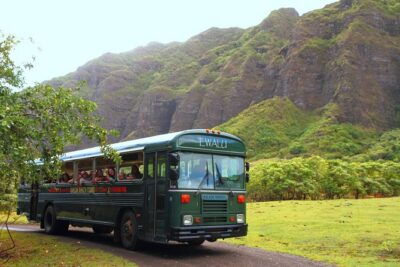 ★ 4.5Kualoa Ranch Movie Sites and Ranch TourFrom $671,655 reviews
 ★ 4.6Honolulu: Glass Bottom Boat Tour along Oahu’s South ShoreFrom $401,575 reviews
 ★ 4.3Pearl Harbor, USS Arizona, and City TourFrom $691,572 reviews